
A Spotless Guide to Glass Stove Top Cleaning
Published on February 5, 2026

That gleaming, pristine surface of a new glass stove top is one of the best parts of a modern kitchen. But let's be honest, keeping it that way can feel like a full-time job. The secret to effective glass stove top cleaning isn't scrubbing harder; it's using the right non-abrasive materials and consistent, gentle techniques to lift away grime without scratching the surface.
For most day-to-day messes, a quick wipe-down does the trick. It's those tougher, burnt-on stains that require a bit more know-how.
Keeping Your Portland Kitchen Gleaming
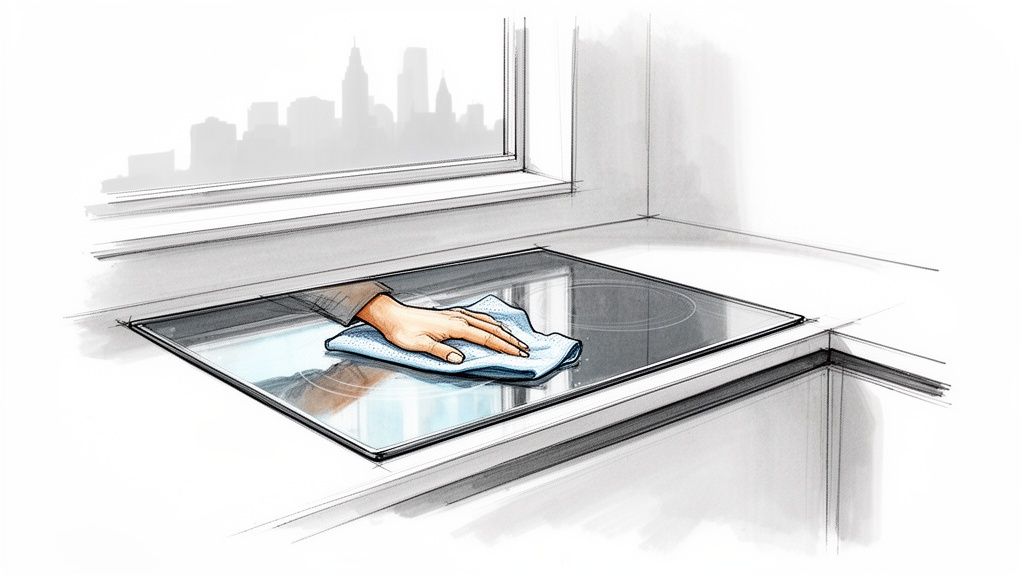
From stylish downtown apartments to sprawling family homes in Beaverton, the sleek glass stove top is everywhere in Portland kitchens. While they look fantastic, they also have a knack for highlighting every single fingerprint, splatter, and boil-over. It’s a constant battle, but it’s one you can win.
After years of providing professional house cleaning across the metro area, we've figured out the best methods for restoring that showroom shine without causing any harm. The goal is always the same: tackle everything from daily smudges to stubborn, baked-on disasters safely and effectively.
Why Proper Cleaning Matters
A glass cooktop is more than just a pretty surface; it’s a high-performance appliance that demands specific care. Grabbing the wrong cleaner or a rough sponge can lead to permanent scratches, ugly discoloration, or even cracks over time. This is exactly why a dedicated cleaning routine is so crucial.
- Prevent Permanent Stains: Sugary spills are the worst culprits. When heated, they can actually bond with the glass and cause pitting if you don't clean them up the right way.
- Maintain Cooking Efficiency: A clean, smooth surface ensures your pots and pans make optimal contact with the heating elements, which means more even and efficient cooking.
- Boost Kitchen Hygiene: Getting rid of old food residue means you're not giving bacteria a place to thrive.
It's clear that homeowners are looking for the right solutions. The global market for specialized glass stove top cleaners hit USD 1.41 billion in 2024, which shows just how many of us are dealing with this exact cleaning challenge.
Whether you're doing a quick daily tidy or a deep move-out cleaning in Lake Oswego, using the proper techniques will make all the difference. And while you’re at it, why not give your whole kitchen some love? Check out our guide on how to clean kitchen cabinets inside for a total refresh.
Assembling Your Cleaning Toolkit
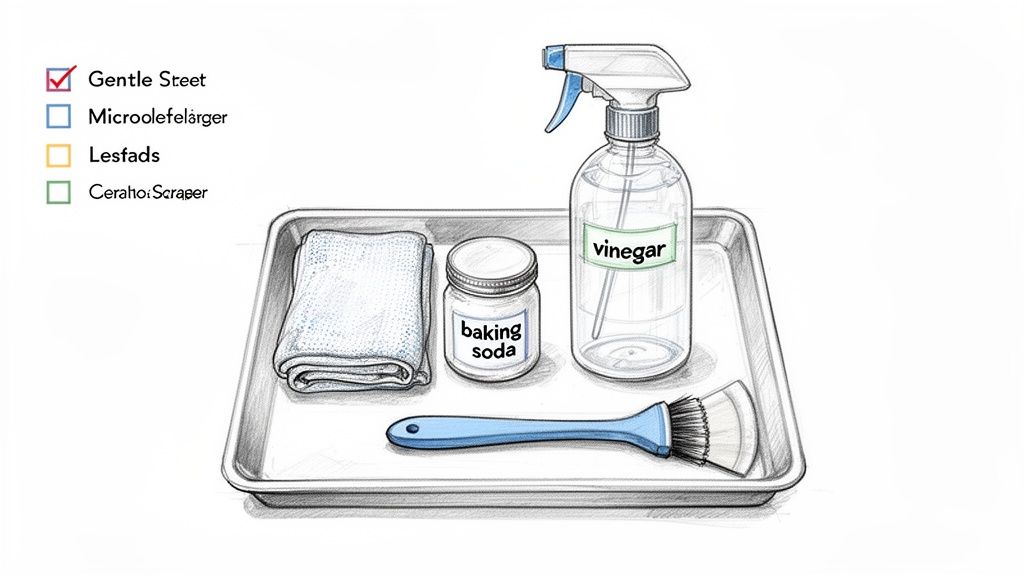
A successful glass stove top cleaning session always starts with having the right supplies ready to go. The best part? You probably don’t need a cabinet full of aggressive chemicals. Some of the most powerful tools for tackling everyday grime are likely already in your kitchen pantry.
Taking a minute to gather your toolkit makes the whole process faster and way less frustrating. The goal is to find things that are tough on messes but gentle on the glass. The last thing you want to do is scratch that beautiful, smooth surface—a common fear we hear from homeowners in Hillsboro, especially with newer appliances.
Your Go-To Cleaning Supplies
For everything from a quick wipe-down to a serious battle with a burnt-on spill, you'll want a few key items. Our professional house cleaning teams have this down to a science, relying on a simple but mighty combination of tools.
- Microfiber Cloths: Grab at least two of these—one for the actual cleaning and a second, dry one for buffing. Microfiber is a game-changer because it’s super soft and absorbent, grabbing dirt and moisture without leaving behind those annoying streaks or lint.
- A Non-Abrasive Sponge: To give stuck-on spots a little nudge without causing damage, a soft scrub sponge is your best friend. Just promise me you'll stay away from steel wool or those classic green scouring pads; they will absolutely leave permanent scratches.
- A Plastic or Silicone Scraper: The secret weapon for lifting that stubborn, caked-on gunk is a cooktop razor scraper. If you don't have one, a plastic spatula or even an old gift card can work in a pinch for smaller spots without putting your stove top at risk.
DIY vs. Store-Bought: What’s in Your Arsenal?
When it comes to the actual cleaning agent, you’ve got choices. What you pick really depends on how big of a mess you're dealing with. For most day-to-day cleaning, a simple DIY solution does the trick perfectly and keeps harsh chemicals out of your kitchen.
Before you reach for a commercial product, take a look at what you already have. The following table breaks down some common household heroes against their store-bought counterparts.
Stove Top Cleaning Supplies DIY vs Store-Bought
| Cleaning Task | DIY Solution (Household Items) | Commercial Product | Pro Tip |
|---|---|---|---|
| Daily Wipes & Light Grease | Spray bottle with 50/50 white vinegar and water | Weiman or Cerama Bryte Daily Cooktop Cleaner Spray | For a streak-free shine, always buff with a dry microfiber cloth after wiping. |
| Minor Food Spills | A paste of baking soda and water | A good quality cooktop cleaning cream/polish | The baking soda paste provides just enough grit to scrub without scratching the surface. |
| Tough, Burnt-On Stains | Baking soda paste + a hot, damp towel left to sit for 15 minutes | Cerama Bryte Burnt-On Grease Remover | The steam from the hot towel works with the baking soda to soften and lift the baked-on mess. |
| Hard Water Spots & Haze | A few drops of lemon juice or white vinegar on a cloth | Specialized glass/ceramic cooktop polish | The acid in vinegar or lemon juice is fantastic for cutting through mineral deposits. |
While DIY is great for maintenance, there are times when you need to bring in the big guns.
For those really stubborn, carbonized messes that have been cooked on for days, a specialized commercial cooktop cleaner can save you a lot of elbow grease. These creams are made specifically to dissolve tough stains while adding a protective polish. Just make sure the label explicitly says it’s for glass or ceramic cooktops. It’s a small detail, but it’s one our maid service professionals know is crucial for protecting your appliance.
Your Daily and Weekly Cleaning Routines
The real secret to keeping a glass stove top looking great isn't some magic product—it's consistency. A few minutes of upkeep each day will save you from the back-breaking scrubbing of greasy, burnt-on messes down the road. It’s a simple habit that makes a huge difference, especially in a busy household.
We've seen it time and time again while providing our apartment cleaning services in the Pearl District: simple daily and weekly habits are what keep a cooktop looking brand new for years. This little bit of effort prevents permanent damage from things like sugary spills or acidic splatters, which can actually etch the glass if they sit too long.
The Two-Minute Daily Wipe-Down
The single most effective thing you can do is give your stove top a quick wipe after every meal, as soon as it's completely cool. This isn't a deep clean; think of it as a quick reset to stop spills from settling in.
- Cool Down First: Safety first. Never, ever clean a hot surface. Most modern stove tops have an indicator light that stays on until it's safe to touch.
- Clear the Debris: Grab a soft, damp cloth or a paper towel and just brush away any loose crumbs or fresh spills.
- Quick Spray and Shine: For daily use, a simple 50/50 mix of white vinegar and water in a spray bottle works wonders. It cuts right through light grease and buffs to a streak-free shine with a dry microfiber cloth.
Honestly, this whole process takes less time than brewing a cup of coffee and it's your best defense against stubborn, baked-on gunk.
Your Go-To Weekly Cleaning Method
Set aside about 10-15 minutes once a week for a slightly deeper clean. This is your chance to tackle the minor grease splatters and water spots that build up after a few days of cooking. It’s a gentle but effective method, similar to what our professional house cleaning teams use to get that perfect finish.
Ready for a spotless home?
Pro Tip: Baking soda is your best friend for this weekly clean. It’s a mild abrasive, which means it has just enough grit to lift grime without scratching the delicate glass surface.
Here’s how to restore that sparkle:
- Start by making a paste. Just mix a few tablespoons of baking soda with a little water until you get a thick, frosting-like consistency.
- Next, spread that paste over any stained or greasy areas on the cool cooktop. For tougher spots, don't be shy—apply a nice, thick layer.
- Now for the trick: lay a hot, damp towel over the paste and let it sit for about 15 minutes. The steam works to soften and break down all that grime, doing most of the hard work for you.
- Remove the towel and grab a non-abrasive sponge or microfiber cloth. Gently scrub the surface in small, circular motions. You'll feel the loosened residue lift right off.
- Finally, use a clean, damp cloth to wipe away all the baking soda. Finish by buffing the entire surface with a dry microfiber cloth to get rid of any streaks and bring back that brilliant shine.
Making this part of your weekly routine is a cornerstone of good kitchen hygiene. To see how this fits into a larger strategy for a spotless kitchen, take a look at our complete kitchen deep cleaning checklist for more expert advice.
Removing Tough Burnt-On Food and Stains
It happens to even the most meticulous cook in Portland. A pot of chili bubbles over, or a sweet glaze splatters and instantly fuses to the hot glass. These stubborn, burnt-on messes can look like a permanent disaster, but you can absolutely restore your stove top’s smooth surface with the right approach.
This is where a lot of people go wrong. In a moment of frustration, they'll grab an abrasive scouring pad or a harsh chemical cleaner. Our maid service has seen the sad results all too often: permanent scratches and dull spots that can't be polished away. The secret is to use specific techniques that break down the burnt-on gunk without damaging the glass itself.
When a simple paste just won't cut through those really cooked-on disasters, it's time to pull out the tool professional cleaners swear by: the razor scraper.
Mastering the Razor Scraper
Taking a razor blade to your glass cooktop sounds intimidating, I know, but it's genuinely one of the most effective and safest ways to remove caked-on residue—if you do it correctly. It all comes down to the angle and a little bit of lubrication.
- Angle is Everything: You need to hold the scraper at a very low angle, somewhere between 30-45 degrees to the surface. A common mistake is trying to dig at a spot with the corner of the blade, which is a surefire way to gouge the glass.
- Lubricate the Surface: Before you even touch the blade to the glass, spritz the area with some water or a bit of your cooktop cleaner. This creates a slick surface for the blade to glide over, preventing it from catching or skipping.
- Apply Gentle, Even Pressure: Use a firm but gentle motion to push the blade forward. You'll feel it lift the burnt food right off the glass. Work in small, focused sections and make sure to wipe the blade clean every few passes.
This method is a game-changer for those crusty, crystallized sugar spills or the black, carbonized ring left behind after a pot boils over. It physically lifts the mess that even strong chemical cleaners can't seem to dissolve.
The Power of a Baking Soda Poultice
For more widespread burnt-on grime that isn't quite thick enough to need a scraper, a baking soda poultice is the perfect solution. This technique uses a bit of basic chemistry and a lot of patience to do the hard work for you.
First, mix up a thick paste using baking soda and a tiny bit of water—you want it to have the consistency of frosting. Slather this paste generously over all the stained areas, making sure the entire mess is completely covered. Now, grab a dish towel, soak it in hot water, wring it out so it's damp but not dripping, and lay it right over the paste. Let the whole thing sit for at least 15-20 minutes.
What’s happening here is pretty cool. The mild alkalinity of the baking soda combined with the steam from the hot towel works to soften and break down the carbon bonds in the burnt food. Once it’s had time to work its magic, you can come back and gently scrub the area with a non-abrasive pad. The grime should lift away with very little effort. This exact process is a cornerstone of our deep clean service for kitchens that need some serious TLC.
Some tough spots, like those from certain oils, respond especially well to this method. For other types of marks, you might want to learn more about how to use a Magic Eraser safely and effectively on our blog.
The demand for effective cleaning solutions is high, reflecting the popularity of these appliances in modern Portland homes. Over 70% of new homes in North America now feature glass cooktops, which require very specific, non-abrasive care to stay looking new.
This infographic gives a great visual breakdown of a simple routine for keeping your cooktop in top shape.
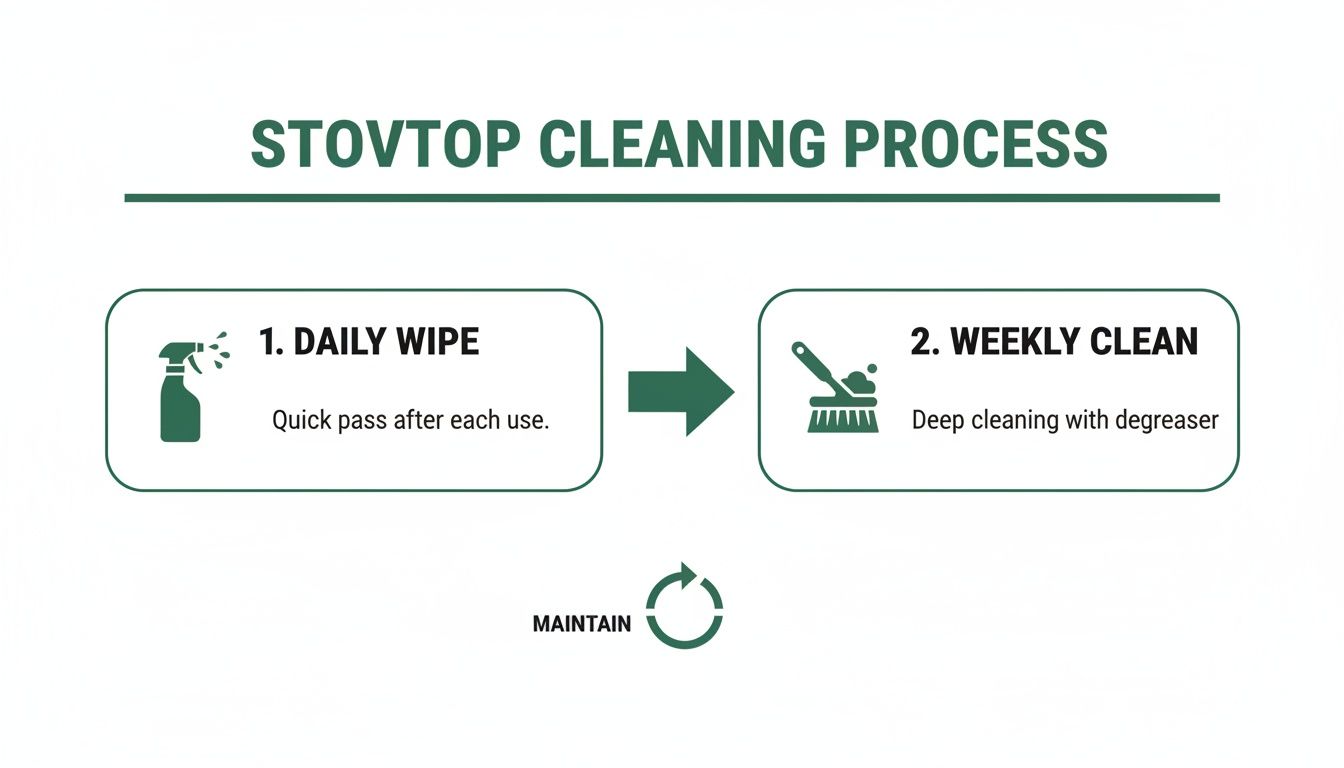
Separating the daily and weekly tasks really shows how a little consistent effort goes a long way in preventing the need for a major scrubbing session down the road.
Finishing Touches: The Streak-Free Shine and How to Keep It
After you’ve done the hard work and conquered the grime, the final step is giving your stove top that showroom-worthy, streak-free shine. This isn’t just for looks; a properly polished surface is slicker and helps prevent future spills from sticking so stubbornly.
Getting that perfect, mirror-like finish is all about the final buff. A lot of people grab a paper towel for this, but that’s a classic mistake. You’ll almost always end up with tiny fibers and lint left behind. The real secret? A completely clean, bone-dry microfiber cloth.
Mastering the Final Buff
Once your cooktop is clean and you've wiped away all the cleaning paste or spray, the polishing part is quick but critical.
- The Rinse Spray: Give the cool surface a light spritz with a 50/50 mix of white vinegar and water. Think of this as a rinsing agent—it cuts through any faint film left by your cleaner.
- The Buffing Technique: Grab your dry microfiber cloth and wipe the surface in long, even strokes, all going in the same direction. Then, switch to small, circular motions to buff the entire surface until it gleams.
- Check Your Work: The best way to spot streaks is to bend down and look at the cooktop from a low angle. The overhead kitchen lights will reveal any spots you missed, which you can quickly buff out.
Expert Insight: Seeing a stubborn, hazy film that won't budge? That's often mineral buildup from hard water, a common issue in some Portland-area homes. Just a few drops of straight white vinegar on your buffing cloth will dissolve it instantly.
Smart Habits to Keep Your Cooktop Looking New
Honestly, the best glass stove top cleaning method is simply not having to do it as often. A little prevention saves a ton of scrubbing down the road. Building a few good habits into your cooking routine will make a massive difference.
- Pick the Right Pans: Cookware with smooth, flat bottoms is your friend. Think stainless steel or titanium. Try to avoid using cast iron or stoneware directly on the glass, as their rough texture can create tiny scratches over time.
- Lift, Don't Drag: This is the big one. Always lift your pots and pans to move them, even if it's just an inch. Sliding is the #1 cause of those permanent scuffs and scratches.
- Check for Spills Underneath: Before you put a pan on a burner, give the bottom a quick wipe. Any grease or food residue on the outside of the pot will burn directly onto the glass.
These little preventative steps are a huge part of any professional home cleaning service's strategy. They don’t just make your daily cleanup easier; they protect the investment you've made in your kitchen. It's no surprise the market for effective hard surface cleaners is booming—it's expected to jump from USD 4.1 billion in 2026 to USD 6.1 billion by 2036, and North America makes up 40% of that demand. For a deeper dive into market trends, you can check out the full report from Future Market Insights.
When to Call in the Pros for Your Stove Top
While the cleaning methods we’ve walked through can handle most day-to-day messes, there are times when a stove top needs more than just a little elbow grease. Years of baked-on grime, stubborn stains from repeated boil-overs, or even just a packed schedule can turn glass stove top cleaning into a job for the experts.
Knowing when to pass the torch can save you a ton of time, prevent accidental damage, and get your kitchen looking brand new again. Our cleaning services are here to help when that happens.
Scenarios That Really Call for a Professional
Sometimes, calling a professional is less of a luxury and more of a necessity. A move-out cleaning, for instance, is one of those times. If you've ever rented an apartment in Beaverton, you know that landlords can have sky-high standards for cleanliness, and a pristine stove top is often key to getting your full security deposit back. A professional service ensures no detail gets missed.
Post-renovation cleanup is another beast entirely. That fine, gritty dust from construction gets everywhere and can be a nightmare to get off appliances. We often help homeowners in the Portland area after a kitchen remodel, using specialized gear to lift away construction debris without putting a single scratch on that delicate glass surface.
But you don't need a huge event to justify getting a deep clean service. Life just gets busy. For professionals in downtown or families juggling work and school in Hillsboro, spending a whole afternoon scrubbing a stove just isn’t in the cards. A home cleaning service can knock out in an hour what might take you all day.
Our cleaning technicians know exactly how to assess your cooktop's condition. They use professional-grade solutions—the kind you can't buy in stores—to safely dissolve years of buildup without harming the glass.
The Real Value of Professional Expertise
Hiring a service isn't just about saving time; it's about getting guaranteed results and protecting your appliance. We’ve seen it all—homeowners who accidentally used an abrasive cleaner that left permanent cloudy spots, or used a scraper at the wrong angle and created deep gouges. A professional maid service takes that risk completely off the table.
Think about what you’re really getting:
- The Right Tools for the Job: We use pH-balanced cleaners and specific polishing compounds that restore that factory shine without causing damage.
- Your Time Back: Your weekend is valuable. What feels like a frustrating chore to you is a routine, efficient task for our trained team.
- Results You Can See: A professional clean brings a level of detail that’s tough to match on your own. It doesn’t just revitalize your stove; it lifts the feel of your entire kitchen.
So, if you're staring down a stain that refuses to budge, getting ready for a move, or just feel swamped by your to-do list, it’s the perfect time to call for backup. Let a pro handle the tough stuff so you can get back to enjoying your home.
Ready to reclaim your time and enjoy a spotless kitchen without the hassle? Neat Hive Cleaning provides expert deep cleaning and maintenance services across the Portland metro area. Get your free estimate and book your service online today!
Ready for a spotless home?