
Removing hard water stains: A quick guide to removing hard water stains
Published on February 14, 2026
If you’ve ever found yourself scrubbing at a cloudy film on your glass shower door or picking at stubborn white spots on your kitchen faucet, you’ve met the calling card of hard water. It’s a common frustration for pretty much everyone in the Portland metro area, turning what should be shiny surfaces into a constant cleaning battle.
Hard water is really just water with a high concentration of dissolved minerals, mostly calcium and magnesium. It’s perfectly safe to drink, but when it evaporates, it leaves behind that chalky residue we all know as limescale. This stuff doesn't show up overnight; it builds up in layers, slowly but surely dulling the finish on your fixtures and glass.
The Impact on Your Home
Over time, this mineral buildup can become a lot more than just an eyesore. It's the reason your showerhead gets clogged, the water pressure in your faucets drops, and your dishes come out of the dishwasher with a hazy film.
For folks living in suburbs like Beaverton, where so many homes have modern chrome and glass fixtures, these stains are especially noticeable and frustrating. The endless cycle of scrubbing can really feel like you’re fighting a losing battle, which is why having a reliable home cleaning service on call is so essential for busy families.
What starts as a minor annoyance can spiral into a bigger issue that impacts not just how your home looks, but how it functions.
Hard water problems are more than just cosmetic. Studies have shown that high levels of calcium and magnesium can contribute to itchy skin and a dry scalp—a common complaint affecting over 70% of homes in hard water zones.
This is a widespread issue, and the market for solutions proves it. The scale removal industry, valued at $348.7 million in 2021, is on track to hit nearly $435 million by 2028. It’s a clear sign of just how many people are looking for a way out of the limescale trap.
Ultimately, these mineral deposits aren't just staining your bathroom; they’re forcing you into a cycle of more intensive cleaning and a hunt for specialized products. While wiping things down daily definitely helps, sometimes the best way to reset surfaces with years of buildup is to bring in a professional. Our Portland-based cleaning team has seen it all and knows exactly how to restore that original shine.
Your Stain-Fighting Toolkit for Mineral Buildup
Before you wage war on those chalky white spots, you need to assemble the right arsenal. Having a few key supplies ready to go means you can tackle anything from a light film on your shower door to that stubborn, crusty buildup that's been mocking you for months.
You don't need a huge collection of fancy products, either. In fact, some of the most effective stain fighters are probably hiding in your pantry right now. The whole idea is to have a versatile kit that works on different surfaces without causing damage.
This flowchart is a great visual guide for figuring out where to start. It breaks down the common issues hard water causes and points you toward the best solutions, whether you're dealing with visible stains or just the annoying effects on your skin.
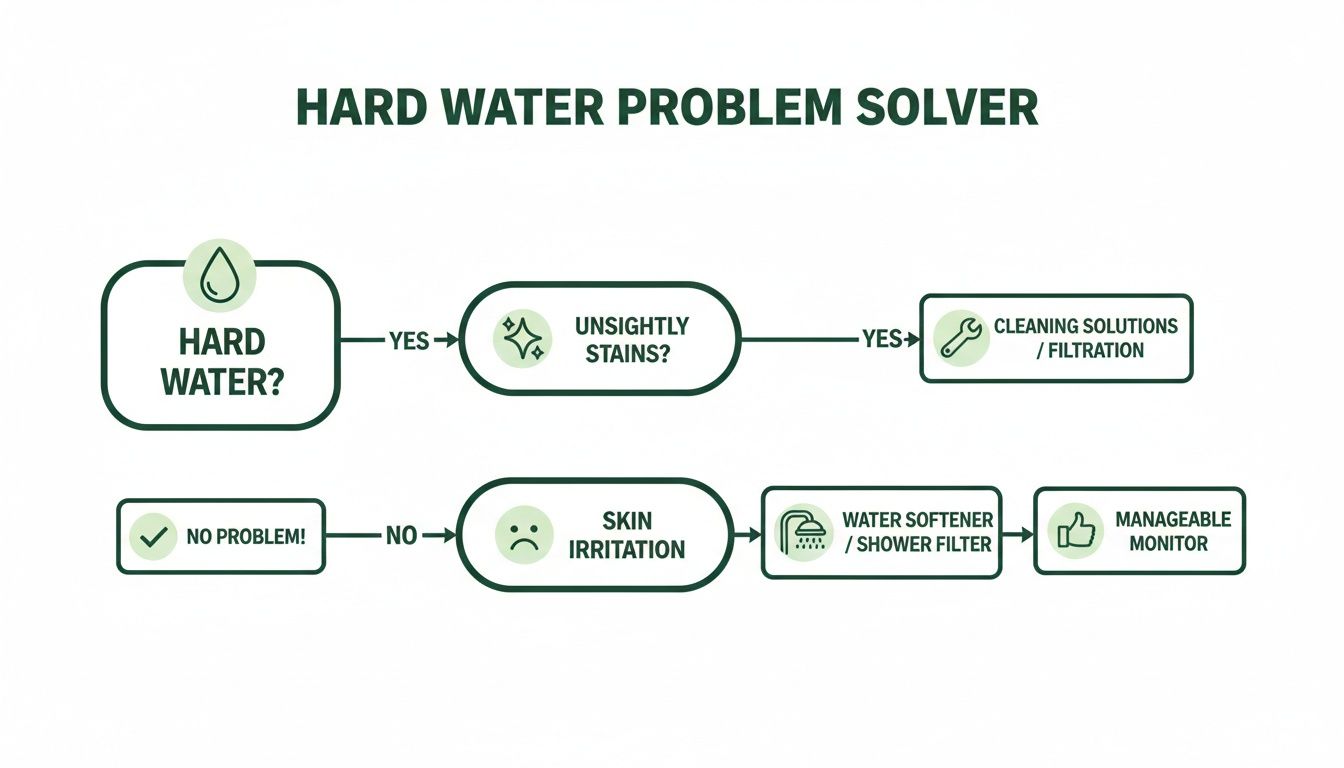
As you can see, the first step is always identifying the specific problem you're up against. Once you know that, you can choose your weapon.
Your Pantry Powerhouses: DIY Solutions
For everyday apartment cleaning and lighter stains, you really can’t beat the simple, natural stuff. These are my go-to items that get the job done without harsh chemicals.
- Distilled White Vinegar: This is the undisputed champion. The acetic acid in vinegar works wonders, dissolving the calcium and magnesium that make up hard water stains. It’s a lifesaver for glass, chrome, and ceramic tile.
- Baking Soda: Think of this as your gentle scrubbing agent. It’s a mild abrasive that provides just enough grit to lift stains without scratching delicate surfaces. I love mixing it with a bit of water to form a paste for cleaning grout and fixtures.
- Lemon Juice: Just like vinegar, the citric acid in lemon juice is fantastic at breaking down mineral deposits. Plus, it leaves behind a much nicer scent! It’s perfect for shining up faucets and sinks.
A word of caution from experience: never, ever use vinegar or lemon juice on natural stone like marble, granite, or travertine. The acid will eat into the surface, causing etching that can permanently dull the finish. Always test any cleaner on a small, hidden spot first!
DIY vs Commercial Hard Water Stain Removers
Deciding between a homemade solution and a store-bought cleaner usually comes down to stain severity, surface type, and your personal preference. While DIY options are great for regular upkeep, sometimes you need to bring in the heavy hitters for years of caked-on mineral deposits. This table breaks down the pros and cons to help you choose.
| Solution Type | Best For | Pros | Cons / Cautions |
|---|---|---|---|
| Vinegar / Lemon Juice | Glass, chrome, ceramic, porcelain, stainless steel | Inexpensive, non-toxic, readily available | Can damage natural stone; strong smell; may require more scrubbing |
| Baking Soda Paste | Grout, fixtures, sinks, tubs | Gentle abrasive, cheap, versatile, neutralizes odors | Can be messy; not effective on its own for heavy buildup |
| Mild-Acid Commercial Cleaner | Stubborn, old stains on non-porous surfaces | Fast-acting, powerful, requires less effort | Can be harsh; requires gloves and good ventilation; risk of surface damage if used incorrectly |
| Abrasive Commercial Cleaner | Tough stains on durable surfaces like porcelain or ceramic | Very effective at scrubbing away thick mineral layers | High risk of scratching surfaces like glass, chrome, or acrylic |
Ultimately, the best approach is often a combination. You can use your DIY pantry staples for 90% of your routine cleaning to keep stains from forming. Then, when you face a particularly tough spot, you have a targeted commercial product ready to knock it out without over-exposing your home to harsh chemicals.
Proven Methods for Restoring Different Surfaces
Hard water stains are stubborn, and there’s no single magic bullet for every surface. What works wonders on your glass shower door could be a disaster for your shiny chrome fixtures. Let's break down the field-tested methods we use to tackle the most common problem areas in Portland homes.
Whether you're battling a cloudy shower in a downtown apartment or trying to make fixtures shine again in a suburban Beaverton home, these are the strategies that actually work without causing damage.
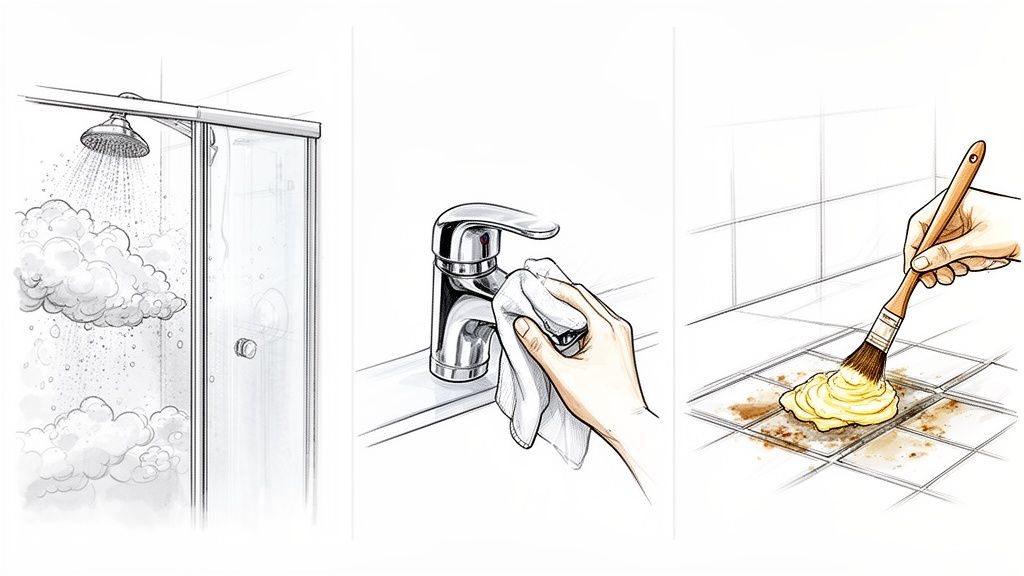
Tackling Glass Shower Doors and Windows
Cloudy glass is probably the most obvious sign you’re dealing with hard water. Those mineral deposits create a frustrating, hazy film that standard glass cleaner just can't touch.
The good news? A simple vinegar solution is your best friend here.
- Mix Your Solution: Grab a spray bottle and fill it with equal parts distilled white vinegar and water.
- Saturate the Surface: Don't be shy—spray the solution generously all over the glass. You want it fully coated.
- Let It Dwell: This is the most important part. Let it sit for at least 10-15 minutes. This dwell time is what gives the acetic acid a chance to actually dissolve the mineral bonds.
- Scrub Gently: Use a non-scratch sponge or a microfiber cloth and scrub in a circular motion. You should feel the grit of the mineral deposits starting to break down.
- Rinse and Dry: Rinse the glass completely with clean water. For a perfect, streak-free finish, immediately dry it with a squeegee or a fresh microfiber cloth.
If you’re facing years of buildup, try this pro-tip: soak a few paper towels in pure vinegar, press them directly onto the toughest spots, and let them cling to the glass for an hour or even overnight. Then, come back and give it a scrub.
Ready for a spotless home?
Restoring Shine to Chrome and Stainless Steel
Faucets, showerheads, and sink fixtures are absolute magnets for hard water spots. Because they’re so shiny, every single white deposit stands out. The trick is to use an acidic cleaner that won't scratch or tarnish the finish.
For minor spotting, a quick wipe-down with a cloth dampened with vinegar or lemon juice often does the job. But if the buildup is thicker, you’ll need a bit more power.
We often see homeowners in areas like Hillsboro, with its beautiful newer developments, accidentally damage their chrome fixtures by reaching for abrasive cleaners. Remember, the goal is to dissolve the minerals, not scrub them off with brute force.
A baking soda paste works beautifully as a gentle abrasive. Just mix baking soda with a little water until it forms a thick paste. Apply it to the fixtures, let it sit for a few minutes, then scrub lightly with a soft-bristled brush (an old toothbrush is perfect for this) before rinsing and buffing dry.
Cleaning Tile and Grout
Hard water stains on tile can make your whole bathroom or kitchen look dingy and old. While ceramic and porcelain tiles are pretty tough, the real battle is often with the porous grout lines that soak up minerals and get discolored.
Start by spraying the tile with your 50/50 vinegar-water mix and let it sit for about 15 minutes. Then, grab a stiff-bristled brush and start scrubbing the tile and grout. This works well for general maintenance and lighter staining.
If the grout is looking particularly bad, a baking soda paste gives you that extra scrubbing power. Apply the paste right onto the grout lines, spray it with your vinegar solution (watch it fizz!), and let that chemical reaction work its magic for a few minutes. Then scrub and rinse. This method is great for lifting deep-set mineral stains and brightening the grout. For more tips on tackling tough bathroom jobs, check out our guide on how to properly clean a bathtub.
It's no surprise that homes are ground zero for these issues. The residential sector dominates the hard water stain remover market, with household applications accounting for over 60% of global demand in 2024. For Portland residents facing water that often exceeds 120 mg/L in hardness, stains on sinks and mirrors are a daily battle.
Dealing with Tough Stains and Household Appliances
Sometimes, your trusty vinegar spray and baking soda paste just aren't enough. You scrub and scrub, but you’re still left with that stubborn, cloudy film that seems permanently etched into your glass and fixtures. We see this all the time, especially in older Portland homes where mineral deposits have been building up for decades. When you’ve hit that wall, it's time to bring out the heavy hitters.
For those seemingly impossible stains on glass shower doors, ultra-fine #0000 steel wool can work wonders. I know, taking steel wool to glass sounds like a terrible idea, but this particular grade is so fine it won’t scratch. The trick is to use it with a lubricant. Just get the glass nice and wet with soapy water, apply very light pressure, and it will shear off those mineral deposits. Always, always test it on a small, out-of-the-way spot first to be safe.
Don't Forget to Descale Your Appliances
Hard water isn't just an eyesore on your surfaces—it's also silently causing damage inside the appliances you use every single day. This internal limescale buildup can tank their efficiency, shorten their lifespan, and just make them work poorly. Descaling your machines isn't just about cleaning; it's essential home maintenance.
Think about it—from your morning coffee to your nightly laundry, hard water minerals are gumming up the works. Here’s a quick rundown for the big three:
Coffee Maker: If your coffee starts tasting a little "off" or the machine is sputtering, it's probably limescale. Just fill the reservoir with a 50/50 mix of white vinegar and water. Start a brew cycle, stop it halfway, and let that mixture sit for an hour to really dissolve the gunk. Then, finish the cycle and run two or three more with plain water to rinse it all out.
Dishwasher: The classic sign of a struggling dishwasher is cloudy glassware. An easy fix is to place a cup of white vinegar in a dishwasher-safe bowl on the top rack of your empty machine. Run a full hot-water cycle. The vinegar will break down the grease and mineral deposits, leaving the inside sparkling.
Washing Machine: Limescale in your washer can trap nasty, odor-causing bacteria and make the machine less effective. For a top-loader, pour four cups of vinegar right into the drum. For a front-loader, add two cups to the detergent dispenser. Run the hottest cycle your machine has, and you're good to go.
Knowing When to Call in the Pros (or a Stronger Product)
Vinegar is a fantastic, everyday tool for hard water maintenance. But let's be realistic—sometimes you need something with more muscle. Commercial descaling products contain stronger acids specifically formulated to dissolve those thick, rock-hard mineral deposits that a simple vinegar solution can't touch.
You can think of it this way: daily wiping is your first line of defense, vinegar is for regular maintenance, but a commercial descaler is the targeted treatment for a serious buildup. It's the kind of thing our professional teams might use on a move out cleaning in Lake Oswego where a property has seen years of hard water neglect.
These products are perfect for showerheads so clogged they barely spray or for faucets with that crusty, white buildup cemented around the base. If you go this route, always read and follow the manufacturer’s directions carefully. Wear gloves, open a window for ventilation, and respect the fact that these are powerful chemicals designed to get a tough job done.
Keeping Hard Water Stains Gone for Good
You’ve won the battle against those chalky, stubborn hard water stains. Great! But keeping them from coming back is a whole different war. After all that scrubbing, the last thing you want is to see that cloudy film reappear. The secret is to switch from a reactive cleaning frenzy to a proactive daily routine.
This isn't just a Portland-area nuisance; it's a massive challenge for homeowners everywhere. How big? The global market for hard water stain removers hit an incredible USD 3.12 billion in 2024. That number alone shows just how many of us are fighting this fight. Experts even predict it will climb to USD 5.94 billion by 2033. This is driven by the fact that mineral buildup can slash appliance efficiency by up to 20-30%, hiking up your energy bills. You can dig into the numbers in this in-depth market analysis on dataintelo.com.
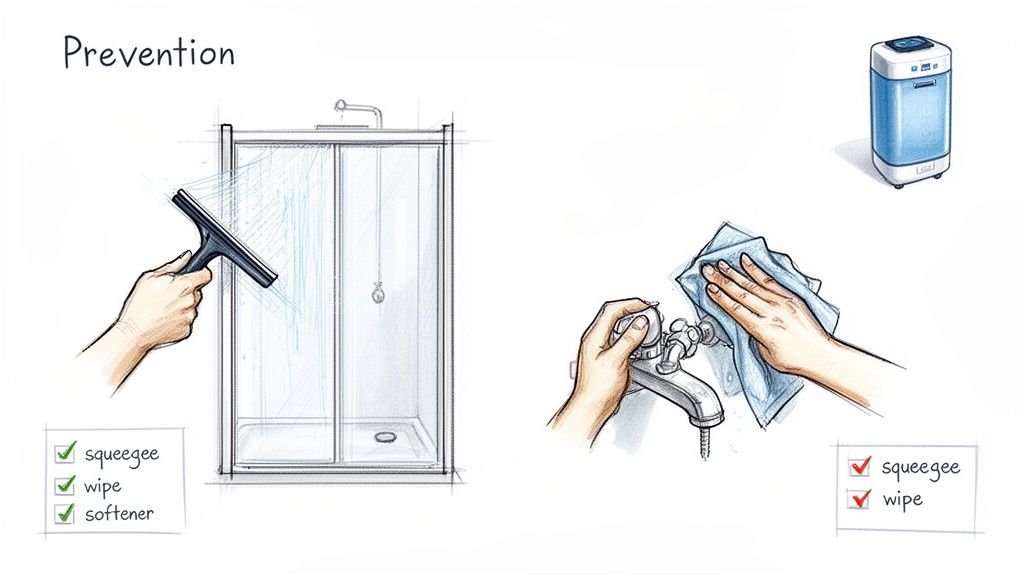
Small Daily Habits with a Big Payoff
When it comes to hard water, the best defense is a good offense. Weaving a few simple habits into your day can stop mineral buildup in its tracks before it has a chance to take hold.
- Squeegee After You Shower: This is non-negotiable. Hang a squeegee in the shower and give the glass and tile a quick wipe-down right after you turn off the water. It takes less than 30 seconds but removes the water droplets before they can evaporate and leave those pesky mineral deposits behind.
- Wipe Down Fixtures: After you wash your hands or brush your teeth, grab a dry microfiber cloth and give the faucet, handles, and drain a quick polish. This simple move prevents water spots and keeps your chrome gleaming.
- Use a Daily Shower Spray: Whether you buy one or mix your own, a daily shower spray helps break down soap scum and minerals, making your weekly cleaning sessions way less of a chore.
These little actions form the bedrock of a stain-free home. They’re also a key part of any smart cleaning strategy, like the one outlined in our comprehensive bathroom deep cleaning checklist.
Playing the Long Game: Permanent Solutions
Daily habits are a game-changer, but if your home has seriously hard water, you might need to bring in the heavy hitters. Investing in a more permanent solution can save you a ton of time and frustration down the road.
The single most effective way to eliminate hard water stains is to stop them at the source by installing a whole-house water softener. This system removes the problem-causing minerals—calcium and magnesium—before the water even enters your pipes. It protects everything from your shower doors to your internal plumbing.
Yes, a water softener is an upfront investment. But for homeowners in areas like Beaverton, it quickly pays for itself. You’ll extend the life of your dishwasher, washing machine, and water heater, not to mention your cleaning will be easier and you’ll use less soap and detergent. Combine this with daily wipe-downs, and you can keep your home looking its best with way less effort.
When to Trust a Professional Home Cleaning Service
DIY solutions are brilliant for tackling everyday hard water spots and keeping your home looking fresh. But let's be honest, sometimes you run into a problem that feels less like a cleaning job and more like a full-blown restoration project.
That's the moment to seriously consider calling in the pros. If you're staring at years of caked-on mineral buildup—the kind that looks permanently etched into your shower door—a professional's toolkit can make all the difference. Our teams come armed with commercial-grade cleaning agents and specialized equipment that can safely power through the toughest limescale without scratching or damaging your surfaces.
Scenarios That Call for a Professional Deep Clean
Certain situations are a clear signal that it’s time to pass the scrubbing brush to an expert. These are the times when your energy is better invested elsewhere, and you simply need flawless results.
A perfect example is our move out cleaning services. Getting your security deposit back often hinges on leaving the property in immaculate condition. A proper deep clean service for a rental in Lake Oswego, for instance, requires a meticulous attention to detail that goes way beyond a quick wipe-down, especially with those stubborn hard water rings and spots left behind.
Preparing a house to go on the market is another big one. Every little detail matters to potential buyers. A professional deep clean makes kitchens and bathrooms sparkle, helping buyers imagine themselves in a beautiful, well-maintained home. Think of it as a small investment for a potentially faster, more profitable sale.
The Advantage of a Professional House Cleaning
Beyond major life events, sometimes you just need to hit the reset button. A thorough, professional house cleaning can bring back your home’s original shine and make your own regular upkeep so much easier.
Our technicians are trained to know exactly which product to use on every surface, from delicate chrome fixtures to porous grout, guaranteeing a safe and stunningly effective clean.
Choosing a professional home cleaning service isn't admitting defeat; it’s a smart move to reclaim your valuable time and get the job done right the first time. Instead of losing your weekend in a battle against mineral deposits, you can trust our dedicated team to make your home sparkle. This frees you up to focus on what’s important, whether that’s unpacking in a new Hillsboro home or just finally enjoying a relaxing weekend.
Ready to reclaim your time and enjoy a home that truly shines? Let Neat Hive Cleaning handle the hard work with our professional cleaning services. Book your free estimate online today!
Ready for a spotless home?