
How to Remove Rust From a Stainless Steel Sink: Safe DIY Fixes
Published on January 30, 2026
You can often get surface rust off a stainless steel sink with a simple paste made from baking soda and water. Just apply the paste, gently scrub in the direction of the steel's grain with a soft sponge, and rinse it all away. The key is to then wipe the sink completely dry with a microfiber cloth. This approach is surprisingly effective for most light rust stains and won't scratch the surface.
Why Do Stainless Steel Sinks Get Rust Stains Anyway?
It’s a common frustration we see in homes all over the Portland area. You get a "stainless" steel sink, expecting it to live up to its name, only to find confusing orange specks showing up. The name is honestly a little misleading. Stainless steel is rust-resistant, but it’s not completely rust-proof.
Here's the good news: the rust you’re seeing isn't your sink actually corroding. In nearly every case, it's just a surface deposit left by something else. Tiny iron particles get left behind, mix with water, and then oxidize—creating those annoying rust spots. This means the problem is usually superficial and totally fixable.
The Most Common Rust Culprits
Most of the time, rust spots pop up because of simple, everyday kitchen habits. During our house cleaning visits across the Portland metro, these are the main culprits we run into again and again.
- Wet Metal Objects: This is the big one. Leaving cast iron pans, steel wool pads (a huge offender!), or even just a few metal bottle caps sitting in a wet sink is asking for trouble. They shed little bits of iron that quickly rust right onto your sink's surface.
- Abrasive Scouring Pads: If you use steel wool or other harsh scrubbers, you can create tiny, microscopic scratches in the sink's protective layer. Those little grooves are perfect traps for water and iron particles, creating a prime spot for rust to form.
- Local Water Deposits: Some parts of our area, like certain neighborhoods in Hillsboro, have water with a higher mineral content. When this "hard water" evaporates, it can leave behind mineral rings that then trap rust-causing particles from other sources.
The Overlooked Factor: Your Sink's Grade
There's another factor that most people don't think about: the quality of the steel itself. A lot of the builder-grade sinks you find in newer homes and downtown apartments are made from a lower-grade steel that's just more prone to surface rust.
A critical detail many homeowners overlook is the material grade of their sink. Premium 304-grade steel, for example, has more chromium and nickel in it, giving it much better corrosion resistance compared to cheaper alternatives.
In fact, studies suggest that 70-80% of rust complaints on residential stainless steel sinks come from these lower-grade models, not the premium 304 or 316 grades. A budget-friendly sink might seem like a good deal at first, but it can easily lead to more cleaning headaches later on. If you want to dive deeper, you can discover more insights about stainless steel sink grades and how they affect long-term durability.
Ultimately, knowing the cause should give you some peace of mind. The rust is almost certainly a fixable surface problem, not a sign that your sink is about to fall apart.
Gentle Household Solutions for Surface Rust
Before you reach for a heavy-duty chemical cleaner, take a look in your pantry. In our experience providing cleaning services to homes all over Portland, we've found that the best solutions for light, surface-level rust are often the simplest. These gentle, non-toxic methods are surprisingly powerful, safe for your home, and cost next to nothing.
The whole trick is to use a mild abrasive that can gently lift the rust particles without scratching the heck out of your sink's protective finish. That's why we always start with the most basic approach first.
The Baking Soda Paste Method
Our first line of attack for any light rust spot is always a simple baking soda paste. It's a fantastic mild abrasive that gets the job done without causing any harm.
Just mix a few spoonfuls of baking soda with a tiny bit of water until you have a thick paste, almost like toothpaste. Slather this paste directly onto the rust spots and let it sit for about 20-30 minutes. This gives the baking soda time to really work on lifting the stain.
Next, grab a soft sponge or a microfiber cloth and gently scrub the area. Here's the key: always scrub in the direction of the steel's grain. If you look closely, you'll see faint lines in the metal—follow those. This prevents you from creating tiny new scratches. Rinse the sink well with warm water, and you're done.
Using White Vinegar for Tougher Spots
If the baking soda didn't quite do the trick, it's time to bring in the vinegar. The mild acetic acid in white vinegar is great for dissolving rust that’s a little more stubborn.
After you've rinsed away the baking soda, spray a little white vinegar directly on any remaining rust. Don't let it sit for more than 5-10 minutes, as leaving acid on stainless steel for too long isn't a great idea.
Give the spot another gentle scrub with your sponge, again, going with the grain. The one-two punch of baking soda followed by vinegar usually knocks out most surface stains. We use similar principles for other tough spots around the house, as you can see in our guide on how to remove stains from walls.
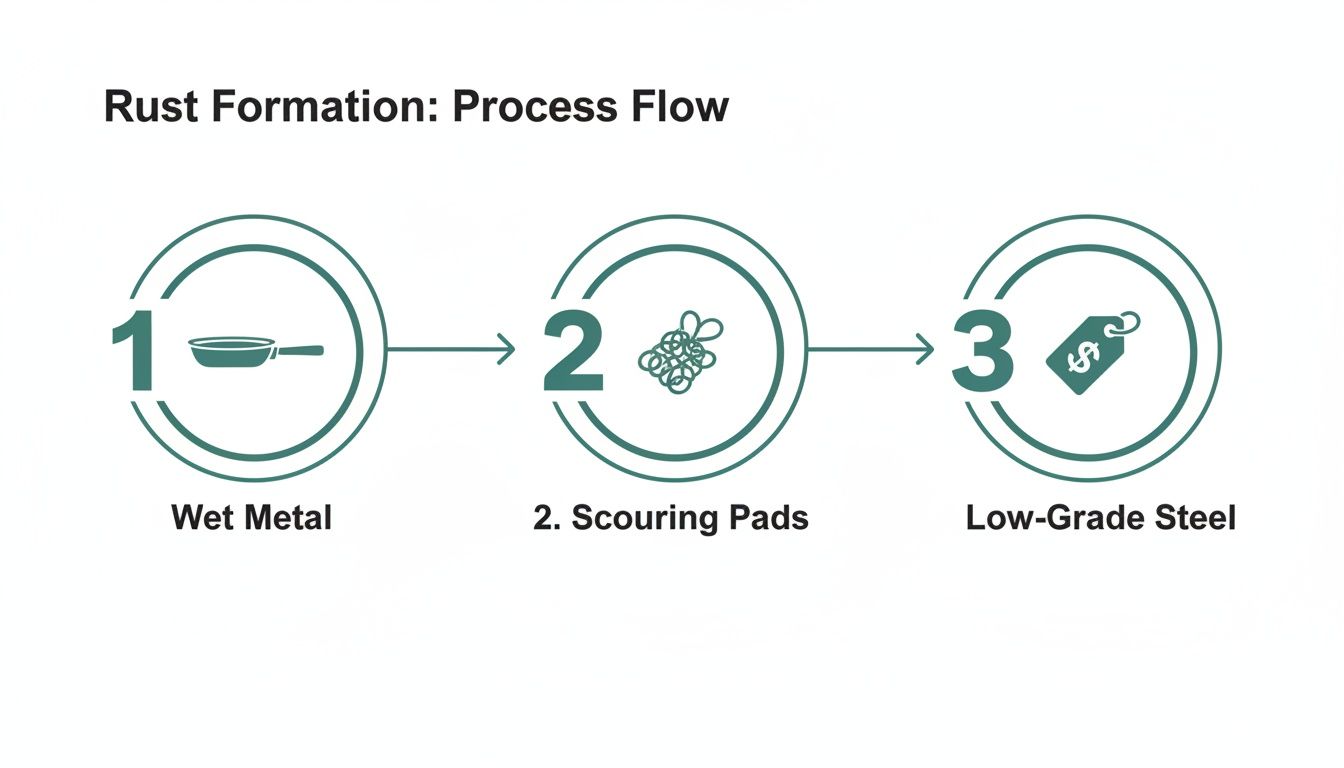
This diagram shows the most common reasons rust appears. It’s almost always something left on the sink, not the sink itself corroding.
To help you decide where to start, here's a quick look at how these two pantry staples stack up.
Comparing DIY Rust Removal Methods
| Method | Best For | Application Time | Cost |
|---|---|---|---|
| Baking Soda Paste | Light surface rust, minor discoloration, general cleaning. | 20-30 minutes | Very low (pennies per use) |
| White Vinegar Spray | Stubborn spots after a baking soda treatment, mineral deposits. | 5-10 minutes | Very low (pennies per use) |
Both are fantastic, safe options to try before moving on to anything stronger.
Crucial Final Step: Whichever method you use, this last part is non-negotiable. After cleaning, rinse the entire sink with water to get rid of any residue. Then, take a dry microfiber cloth and wipe the sink completely dry. This prevents water spots and, more importantly, stops new rust from getting a foothold.
Not only do these methods work, but they're incredibly cheap. Using homemade solutions can slash your cleaning supply costs by 60-70% compared to buying specialized products. A bit of baking soda and vinegar costs less than $2 and has been shown to successfully remove 85-90% of common surface rust stains. It’s a win-win.
Using Commercial Cleaners Like a Pro
Sometimes, a home remedy just isn't enough for those really stubborn rust stains. That’s when we reach for a trusted commercial cleaner. In our professional cleaning kits, a product like Bar Keepers Friend is an absolute must-have. It’s incredibly effective, but the trick is knowing how to use it right to get that perfect shine without harming your sink.
The magic ingredient in this stuff is oxalic acid. It’s a beast when it comes to dissolving rust, but you have to be careful with it. Our maid service team has a tried-and-true process that guarantees a great result every single time.
Choosing the Right Product
First things first, you need to grab the right tool for the job. Bar Keepers Friend typically comes in two main forms, and knowing which one to use makes all the difference.
- The Powdered Version: This is the classic, heavy-duty formula. We pull this out for the tough, set-in rust that's been sitting for a while. You just add a little water to make a paste, which gives you complete control over the scrubbing consistency.
- The Liquid Version: This is the milder, pre-mixed option. It's fantastic for general cleaning, light rust spots, or on finishes where you’re worried about being too aggressive.
For most serious rust situations, we lean on the powdered version. It just has that extra oomph needed to lift the rust right off the surface of the steel.
Ready for a spotless home?
Safety and Technique Are Non-Negotiable
Before you even pop the lid, let's talk about safety. These cleaners work so well because they’re powerful, and they demand a little respect.
Our Professional Process: We always test a new cleaner on a small, hidden spot first—think under the rim or in a back corner. This simple step confirms the product won't discolor or dull your sink's particular finish. It takes 30 seconds and can save you a major headache.
Good ventilation is another must. Even if you're in a cozy downtown Portland apartment, crack a window or flip on the kitchen vent. You want that airflow. And please, always wear protective gloves. Your skin will thank you.
Once you’re ready, make your paste and apply it with a non-abrasive sponge. The key here is to gently scrub with the grain of the steel, not against it. You'll usually see faint lines in the metal; follow them. Circular scrubbing is a big no-no, as it can leave behind unsightly swirl marks. Let the cleaner sit for no more than a minute, then rinse it all away with cool water.
And one final, crucial tip: never, ever mix cleaning chemicals. Combining a product like Bar Keepers Friend with anything containing bleach or ammonia is a recipe for disaster—it can create dangerous toxic gases. Stick to one cleaner at a time and rinse thoroughly. That's how you get a professional-level clean safely.
Common Mistakes That Can Ruin Your Sink
Knowing how to get rust off a stainless steel sink is only half the battle. You also have to know what not to do. In our professional house cleaning rounds across the Portland area, from family homes in Lake Oswego to rentals in Beaverton, we’ve seen countless well-intentioned cleaning attempts go horribly wrong, leaving behind permanent scratches and damage.
A moment of impatience with the wrong tool can cause a lot more harm than the rust itself. Avoiding these common mistakes is the real secret to keeping your sink looking great for years.
The Most Destructive Cleaning Tools
The number one mistake we see homeowners make? Grabbing the wrong tool for the job. It’s an easy thing to do, but some scrubbers that seem perfect for tough stains are actually catastrophic for stainless steel.
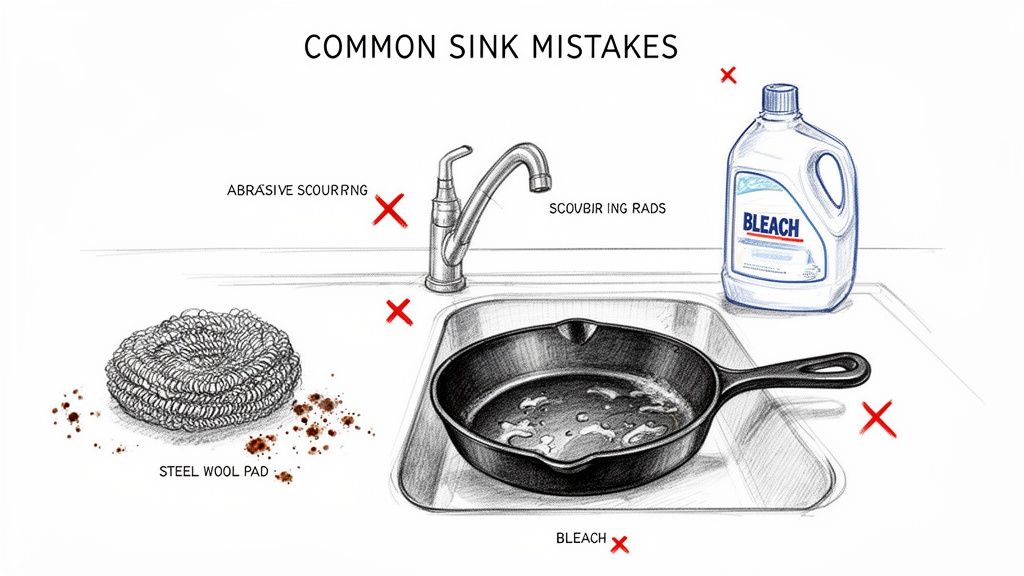
- Steel Wool: This is the absolute worst offender. It might seem logical, but as you scrub, steel wool sheds tiny iron particles. These little fragments get embedded in your sink's surface and are guaranteed to rust later on, creating a far bigger headache than you started with.
- Abrasive Scouring Pads: Those green, scratchy pads are another major culprit. They create a web of micro-scratches all over your sink, which not only dulls the finish but also creates tiny new crevices for grime and rust-causing particles to hide. Always stick to soft sponges and microfiber cloths.
Harmful Chemicals to Avoid
Just as critical as your choice of tools are the chemicals you keep far, far away from your sink. While the protective layer on stainless steel is tough, it's not invincible.
Chlorine bleach is the ultimate enemy of stainless steel. It can aggressively break down the chromium oxide layer that prevents corrosion. This leads to pitting, ugly discoloration, and permanent damage. Never, ever use bleach-based cleaners or let pure bleach sit in your sink.
Oven cleaners and other highly alkaline or acidic solutions can also cause serious harm. When you're in doubt, your best bet is to stick with pH-neutral dish soap or a cleaner made specifically for stainless steel.
Everyday Habits That Invite Rust
Sometimes, the biggest mistakes aren't about cleaning at all—they're about what you leave behind. Trapped moisture is the main trigger for rust, so it's essential to avoid letting water sit for long periods.
Never leave these items sitting in a wet sink:
- Soggy sponges or rubber sink mats
- Cast iron cookware
- Metal food cans, bottle caps, or steel utensils
These items trap a pocket of water right against the steel, preventing it from air-drying and creating the perfect storm for rust. Getting into the simple habit of clearing and drying your sink each night is one of the best preventative steps you can take. It’s a core part of any good home cleaning service routine for a reason—it just works.
Keeping Your Sink Permanently Rust-Free
You’ve done the hard work and banished the rust—now your stainless steel sink is gleaming again. The good news? Keeping it that way is a whole lot easier than removing rust in the first place. It all comes down to a few simple habits that protect your sink's surface from future trouble.
A little daily attention goes a long way, taking just a minute or two but making a world of difference. For busy households, especially in suburban areas like Lake Oswego, being proactive is the secret to a beautiful kitchen that stays clean between professional apartment cleaning appointments.
Your Daily Sink Maintenance Routine
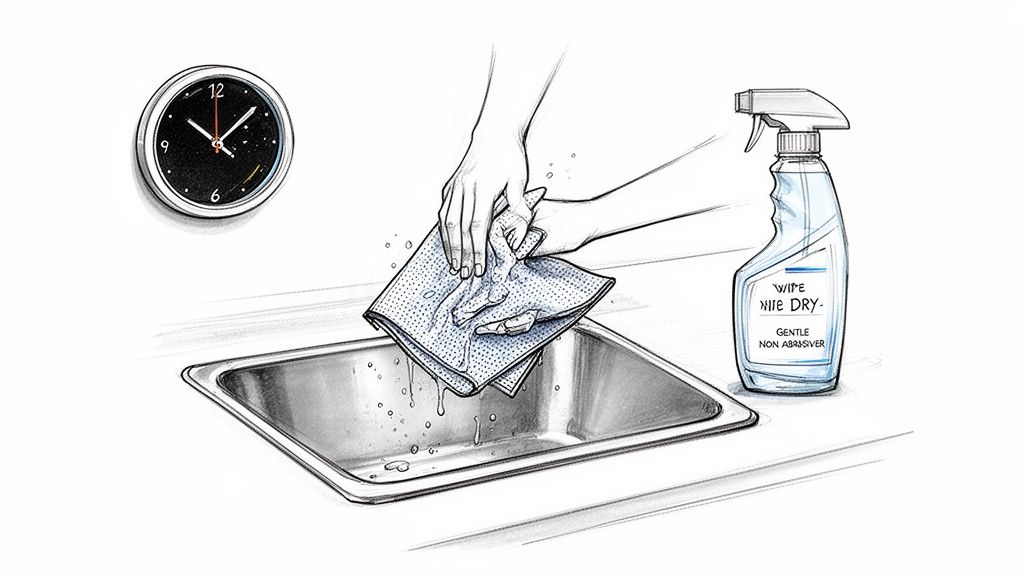
If you adopt only one new habit, make it the "rinse and dry" method. I know it sounds almost too simple to be effective, but this is the single best way to stop rust before it even thinks about starting. It works by tackling the root cause: lingering moisture.
Every evening, once the last dish is washed, give the sink a quick rinse with warm water. This clears out any lingering soap residue or food bits. Then, grab a clean microfiber cloth and wipe down the entire basin, including the faucet and rim, until it's completely dry.
This quick two-step accomplishes a couple of key things:
- It prevents mineral deposits from Portland's water from settling, which causes those frustrating cloudy spots.
- More importantly, it removes the water that stray iron particles need to oxidize and bloom into rust stains.
Weekly Upkeep for a Lasting Shine
Once a week, set aside a few extra minutes to give your sink a little more love. This deeper clean will maintain its beautiful luster and prevent grime from getting a foothold. The best part? You don't need harsh chemicals.
After your usual rinse, while the sink is still damp, sprinkle a light layer of baking soda across the bottom. Using a soft sponge or cloth, gently scrub the basin, always making sure to move with the grain of the steel to avoid scratches. This easily lifts off any stubborn grease or film.
Think of this weekly baking soda scrub as more than just cleaning—it's preventative care. You're gently polishing the surface and helping to maintain the sink's natural protective chromium-oxide layer, which is its built-in defense against corrosion.
Rinse all the baking soda away, and then finish with your daily microfiber dry-down. If you want to add an extra bit of sparkle, put a few drops of mineral oil or a dedicated stainless steel polish on a clean cloth and buff the dry surface. This not only looks great but also helps repel water for a short time.
Sticking to this routine will protect your investment and keep your kitchen looking its best. For more professional tips on keeping your whole cooking space in top shape, check out our complete kitchen deep cleaning checklist.
When to Call in a Professional Cleaning Service
While most surface rust is a manageable DIY job, there are definitely times when it's smarter to call in the professionals. Knowing when to wave the white flag can save you a lot of frustration, prevent accidental damage, and get your sink looking its best.
Sometimes, what looks like a simple rust spot is actually a sign of a deeper problem. Have you ever cleaned a stain only to have it reappear almost immediately? Or maybe you've run your hand over the spot and felt a rough, uneven texture. That's a classic sign of pitting. Pitting means the rust has moved past being a surface-level stain and has actually started to eat away at the steel itself. This kind of corrosion requires more than just elbow grease; it needs professional house cleaning expertise.
Think about a scenario like a move out cleaning in a Beaverton rental. You’re trying to get your deposit back, but the kitchen sink has been neglected for years, and the rust is seriously set in. Home remedies just aren't cutting it. This is where a professional home cleaning service shines. They have the experience to properly assess the damage and bring in the heavy-duty, yet safe, techniques to restore the finish without causing more harm.
When you're up against stubborn stains and deep-seated grime that extends beyond just the sink, it might be a sign you need a more thorough solution. Learn more about what goes into a complete deep clean service for your entire home.
A Few Common Sink Questions We Get Asked All the Time
To wrap things up, we wanted to tackle some of the most common questions our team gets about keeping stainless steel sinks looking their best. It doesn’t matter if we’re doing a standard house cleaning in Portland or a deep move-in cleaning in Hillsboro; these are the things people always want to know.
Can I Just Use Steel Wool on Those Really Tough Stains?
Please don't! This is hands-down the biggest mistake we see people make. Steel wool will absolutely scratch the surface of your sink, but that's not even the worst part.
What's really damaging is that it leaves behind tiny iron particles. Those little flecks will rust, I promise you, creating an even bigger, more stubborn problem than the stain you were trying to fix. Stick with a soft sponge or a non-abrasive scrubber.
Okay, But How Do I Get Scratches Out of My Sink?
For light, surface-level scratches, you can often buff them out yourself. The trick is to first figure out the direction of the steel's grain—look closely, and you'll see faint lines running in one direction.
Grab a specialized scratch removal kit or a fine-grit polishing compound and gently rub only in the same direction as the grain. This helps the scratch blend back into the surrounding finish. Unfortunately, deeper gouges are pretty much there to stay.
Why Does My Sink Always Look So Cloudy and Dull?
That hazy, discolored film is almost always from mineral deposits left by hard water, which we see a lot of around the metro area. Thankfully, the fix is simple.
Just spray the sink down with some plain white vinegar and let it sit for a few minutes. The vinegar will break down the minerals. After that, just give it a good rinse and wipe it completely dry with a microfiber cloth to bring back the shine.
If you take away only one tip, let it be this: The single best way to prevent rust and water spots is to wipe your sink completely dry after you use it. It takes less than a minute and stops moisture problems before they even start.
Sometimes, though, the rust stains are just too deep, or you need a guaranteed perfect finish for something like a move-out inspection. When that's the case, calling in a professional is your best move. For a stress-free solution that gets your kitchen looking immaculate, trust Neat Hive Cleaning to handle it. Get your free estimate today.
Ready for a spotless home?