
Office Deep Cleaning Checklist: A Complete Workplace Guide
Published on January 21, 2026
In the bustling business hubs of Portland and Hillsboro, maintaining a clean office is about far more than just surface-level appearances. It's a fundamental investment in your team's health, focus, and overall productivity, not to mention the first impression you make on clients. While daily or weekly tidying handles the basics, a periodic deep clean is what truly eliminates the accumulated dust, allergens, and grime that routine cleaning can't reach. Over time, these hidden contaminants can impact air quality and contribute to a less professional atmosphere.
This comprehensive office deep cleaning checklist is crafted specifically for small business owners and office managers throughout the Portland metro area. It provides a structured, actionable guide to transform your workspace from superficially tidy to genuinely hygienic and revitalized. We'll move beyond the obvious daily tasks and dive into the critical details that make a significant difference.
Our goal is to equip you with a step-by-step plan to tackle everything from high-dusting and ceiling fixtures to deep cleaning break room appliances and sanitizing high-touch surfaces. This guide breaks down the process, helping you ensure your team has a healthy, safe, and motivating environment to perform their best work. Whether you manage a creative studio in downtown Portland or a tech office in Beaverton, this checklist will help you achieve a profound level of clean that everyone will notice and appreciate.
1. Carpet Deep Cleaning and Steam Extraction
Daily vacuuming is crucial for maintaining office appearances, but it only scratches the surface. An essential part of any comprehensive office deep cleaning checklist involves a professional carpet deep cleaning service, a process that uses hot water extraction (often called steam cleaning) to dislodge and remove deeply embedded dirt, allergens, and bacteria that vacuums leave behind. This method injects a heated cleaning solution into the carpet fibers under pressure and immediately extracts the soiled moisture, revitalizing the carpet's appearance and improving indoor air quality.
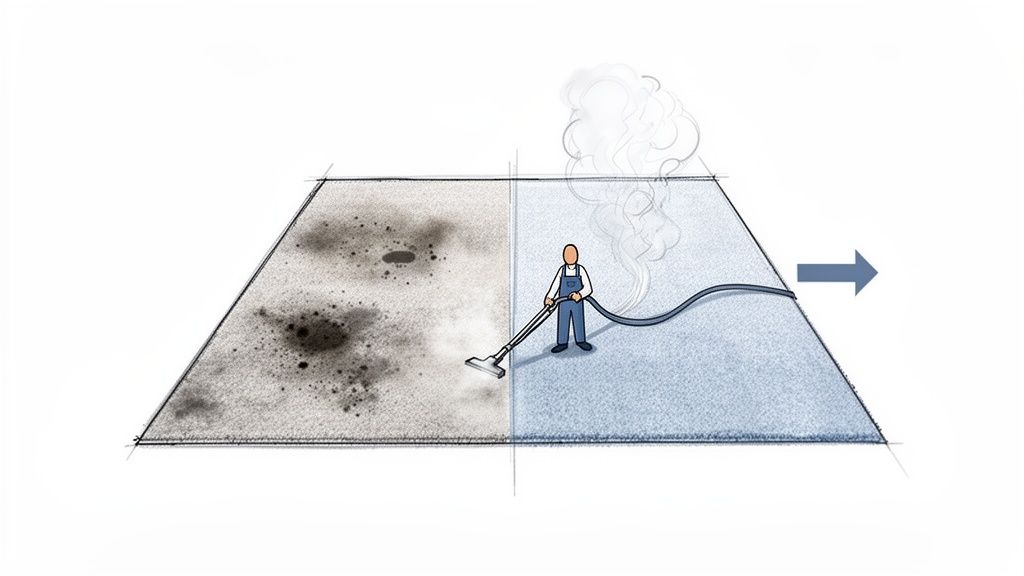
For businesses in the Portland metro area, from the high-traffic tech offices in Beaverton to client-facing law firms in Lake Oswego, maintaining clean carpets is non-negotiable. Regular steam extraction not only protects a significant office investment but also contributes to a healthier environment for employees and makes a powerful first impression on visitors. A professional cleaning service ensures this is done right.
Actionable Tips for Office Carpet Cleaning
To maximize the effectiveness of your carpet deep cleaning efforts, follow these specific strategies:
- Schedule Strategically: Plan your deep clean for weekends or after business hours to avoid disrupting workflow and allow ample drying time.
- Pre-Treat Problem Areas: Identify and pre-treat high-traffic zones like entryways, hallways, and common areas at least 24 hours before the main cleaning. This gives the solution time to break down stubborn grime.
- Enhance Drying: After cleaning, use industrial fans, dehumidifiers, and the building's HVAC system to accelerate drying. This prevents mold and mildew growth and gets your office back in service faster.
- Establish a Cadence: High-traffic commercial spaces benefit from a quarterly deep cleaning schedule. For lower-traffic offices, a semi-annual cleaning may suffice.
Professional cleaning services, guided by standards from the IICRC (Institute of Inspection, Cleaning and Restoration Certification), ensure the job is done right without damaging your assets. To see how our specialized approach can transform your workspace, you can learn more about our commercial cleaning and carpet care services.
2. High-Dusting and Ceiling/Wall Cleaning
While daily cleaning focuses on surfaces within reach, a significant amount of dust, allergens, and cobwebs accumulate on elevated, out-of-sight areas. An essential component of any office deep cleaning checklist is high-dusting, a meticulous process that targets light fixtures, ceiling fans, air vents, crown molding, and the tops of tall cabinets. This task requires specialized equipment like extension poles and ladders to safely and effectively remove contaminants that degrade indoor air quality and create a dingy appearance.
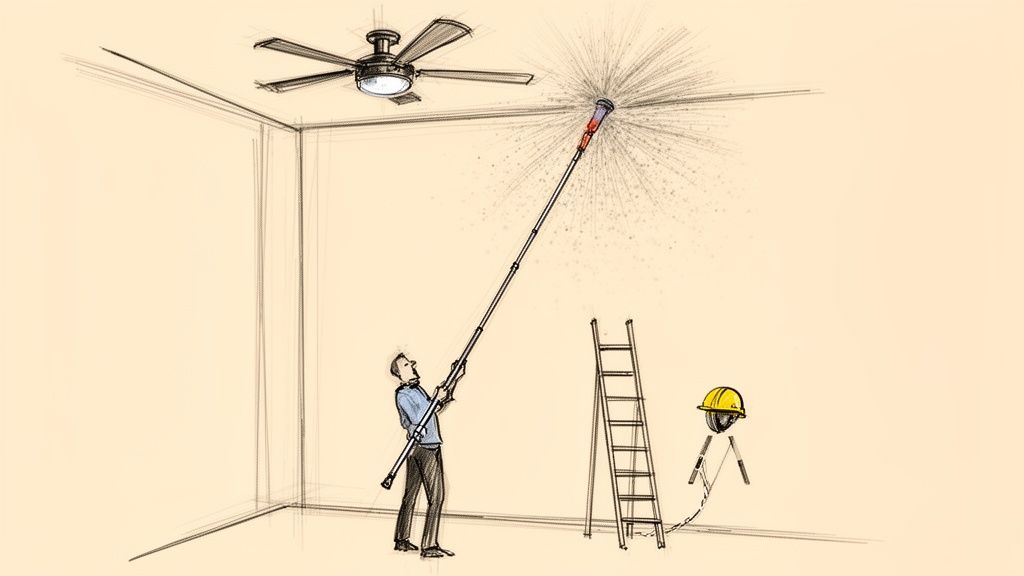
From tech startups in Hillsboro trying to maintain efficient climate control systems to medical offices in Portland where air purity is paramount, overlooking high surfaces is a common mistake. Thoroughly cleaning these areas not only enhances the aesthetic of the workspace but also supports a healthier environment by removing settled dust and allergens before they can circulate through the HVAC system. This attention to detail reflects a commitment to a truly clean and professional setting.
Actionable Tips for High-Dusting and Ceiling/Wall Cleaning
To properly execute high-dusting in your office, integrate these professional strategies:
- Work Top-Down: Always schedule high-dusting before cleaning floors and other surfaces. This ensures that any dislodged dust and debris are captured in the subsequent cleaning steps, preventing re-contamination.
- Use the Right Tools: Equip your team with electrostatic or microfiber dusters on extension poles. These tools are designed to attract and trap dust particles rather than just pushing them around.
- Prioritize Safety: When using ladders, ensure they are stable and that staff follows OSHA guidelines for fall prevention. Always wear protective eyewear and a mask to avoid inhaling dust.
- Establish a Schedule: High-traffic commercial offices or those prone to dust, like spaces near construction in Beaverton, benefit from quarterly high-dusting. Lower-traffic environments can typically manage with a semi-annual schedule.
Following best practices from organizations like the ISSA ensures this task is performed safely and effectively, contributing to a comprehensively clean office. For a professional touch that guarantees no corner is missed, explore our dedicated commercial cleaning services.
3. Window and Glass Surface Deep Cleaning
Routine glass wiping can leave streaks and miss buildup around frames and sills. For a thorough office deep cleaning checklist, professional window and glass surface deep cleaning uses high-grade glass detergents, squeegees and water-fed poles to dissolve hard water deposits, fingerprints and oxidation. Technicians spray on a biodegradable solution then remove it with precise top-to-bottom strokes, ensuring a streak-free finish.
This service covers interior and exterior surfaces such as conference room glass walls, glass doors and storefront windows. In downtown Portland office towers, clear vision and natural light are critical for employee wellbeing. Real estate offices in Lake Oswego rely on pristine panes to showcase listings, and medical practices in Beaverton maintain glass partitions to meet strict sanitation protocols.
Actionable Tips for Window and Glass Cleaning
- Schedule on overcast days to prevent cleaning solution from drying too quickly and leaving streaks.
- Pre-clean window frames and sills using a damp cloth before spraying glass to avoid re-soiling.
- Use a quality squeegee held at a slight angle, wiping top-to-bottom in a single smooth motion.
- Apply a professional-grade glass treatment for enhanced water-spot and dust resistance.
- Consider water-fed pole systems for high or hard-to-reach windows, reducing ladder use and chemical runoff.
Professional window deep cleaning belongs on every office deep cleaning checklist as part of a comprehensive deep clean service to maximize natural light, reinforce a polished brand image and extend the lifespan of glass surfaces. For commercial locations across the Portland metro area, our team offers tailored schedules from monthly to quarterly service.
4. Baseboards, Trim, Walls and Door Cleaning
Over time, walls, baseboards, trim, and doors accumulate a surprising amount of dust, fingerprints, scuffs, and grime. While often overlooked in daily tidying, these surfaces have a high visual impact, and cleaning them is a critical component of a complete office deep cleaning checklist. This process involves carefully wiping down all vertical and lower surfaces to remove built-up soil, restoring a crisp, clean appearance to the entire office environment.
This detailed cleaning erases the subtle signs of wear and tear, from scuff marks left by chairs in a conference room to fingerprints around light switches and door handles. For businesses aiming to project a polished and professional image, such as medical offices in Hillsboro requiring a sterile appearance or retail spaces in Portland maintaining customer-facing aesthetics, pristine walls and trim are non-negotiable.
Actionable Tips for Walls, Trim, and Baseboards
To effectively restore these surfaces without causing damage, follow these targeted strategies:
- Prep First: Before wet cleaning, use a vacuum with a brush attachment or a dry microfiber cloth to remove all loose dust and cobwebs from walls and baseboards. This prevents creating a muddy residue when you introduce a cleaning solution.
- Test Cleaning Solutions: Always test your chosen cleaner on a small, inconspicuous area first to ensure it doesn't damage the paint or finish. A simple solution of mild dish soap and warm water is often sufficient.
- Use the Right Tools: Employ soft microfiber cloths to gently wipe surfaces, which prevents scratching paint. For stubborn scuffs on durable, non-matte finishes, a melamine foam eraser can work wonders, but use it with minimal pressure.
- Establish a Cadence: High-traffic areas like lobbies, hallways, and breakrooms benefit from a quarterly deep cleaning of these surfaces. For lower-traffic offices or private workspaces, a semi-annual schedule is typically adequate to maintain a pristine look.
Tackling stubborn stains and ensuring you use the correct techniques for different paint finishes can be challenging, which is why a professional house cleaning team can make all the difference.
Ready for a spotless home?
5. Grout and Tile Deep Cleaning
Regular mopping keeps tile surfaces looking presentable, but it often pushes dirt and grime into porous grout lines, leading to discoloration and bacterial growth. A crucial item on any office deep cleaning checklist is professional grout and tile deep cleaning, which targets the stubborn buildup that standard cleaning methods can't reach. This process uses specialized equipment like rotary scrubbers, commercial steam cleaners, and pH-balanced solutions to lift embedded mold, mildew, and soap scum from grout and tile pores.
For businesses across the Portland metro area, from medical offices in Beaverton requiring strict hygiene standards to multi-tenant commercial buildings in Hillsboro focused on property value, clean tile and grout are essential for health and aesthetics. A deep clean service not only restores their original appearance but also eliminates unseen pathogens, contributing to a healthier and more professional environment for everyone.
Actionable Tips for Grout and Tile Cleaning
To ensure your tile surfaces are impeccably clean and well-maintained, incorporate these specific strategies:
- Prioritize Steam Cleaning: Use high-temperature steam cleaners for bathroom and kitchen tiles. The heat effectively sanitizes surfaces and kills mold and mildew spores without relying on harsh chemicals.
- Apply a Grout Sealer: After a thorough deep cleaning and drying, apply a high-quality grout sealer. This creates a protective barrier that prevents moisture and dirt from penetrating the grout, making future cleaning easier and more effective.
- Use Proper Cleaning Agents: Avoid acidic cleaners that can etch and weaken grout over time. Opt for professional-grade, pH-neutral solutions designed specifically for commercial tile and grout. Always test a new product on a small, inconspicuous area first.
- Establish a Routine: High-traffic office bathrooms and kitchens should have their grout and tile deep cleaned every 6-12 months. For lower-traffic areas, an annual deep clean is typically sufficient to maintain hygiene and appearance.
Hiring a professional service ensures the right techniques and products are used to restore your tile without causing damage. To learn how our specialized deep cleaning can revitalize your office restrooms and kitchens, explore our comprehensive commercial cleaning services.
6. Kitchen and Break Room Appliance Deep Cleaning
Daily wipe-downs in the office kitchen are a good habit, but they don't address the hidden grime that accumulates inside essential appliances. A critical component of any office deep cleaning checklist is the thorough sanitization of break room equipment, including refrigerators, microwaves, dishwashers, and coffee makers. This process involves a detailed interior and exterior cleaning to eliminate food residue, grease, mold, and persistent odors, preventing potential health hazards and ensuring appliances function correctly.
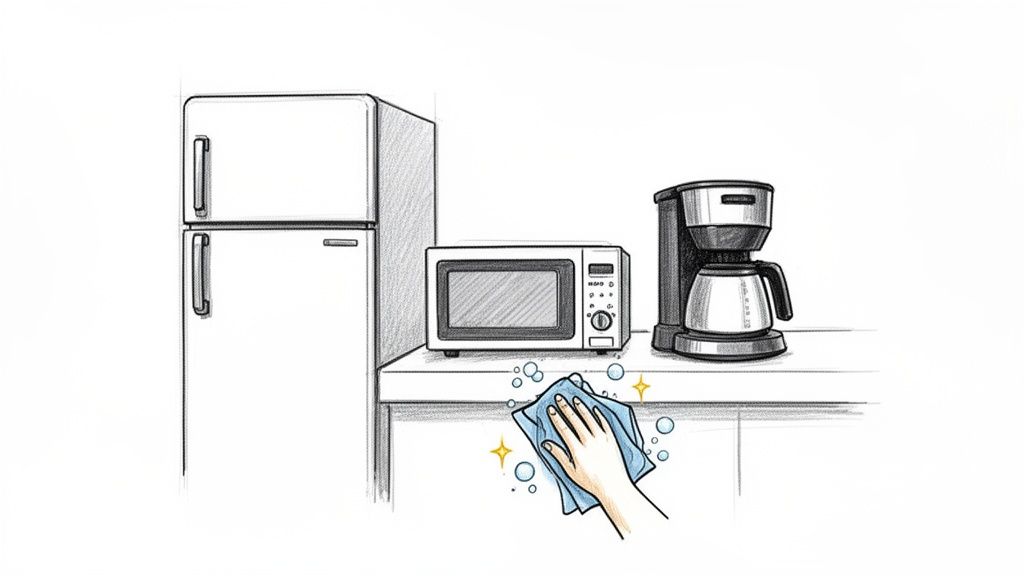
From bustling tech company break rooms in Hillsboro to the small office kitchens in downtown Portland, maintaining hygienic appliances is directly linked to employee wellness and morale. A clean, fresh-smelling kitchen space demonstrates a company's commitment to its team's health and provides a more pleasant environment for daily breaks, ultimately boosting satisfaction and productivity.
Actionable Tips for Appliance Deep Cleaning
To ensure your break room appliances are sanitized effectively and safely, incorporate these specific strategies into your routine:
- Prioritize Safety First: Before cleaning the interior of any appliance, unplug it completely. For larger equipment, ensure the corresponding circuit breaker is switched off to eliminate any electrical risk.
- Disassemble and Soak: Remove all detachable components like refrigerator shelves, microwave turntables, and coffee maker carafes. Wash them separately in hot, soapy water to break down stubborn grime.
- Use Proper Cleaning Agents: For stainless steel exteriors, use a dedicated cleaner and a microfiber cloth to prevent streaks and damage. Deodorize interiors with a simple paste of baking soda and water or a professional enzymatic cleaner.
- Establish a Cadence: High-use break rooms benefit from a quarterly deep clean of all appliances. Descale coffee makers with a vinegar solution every three months to prevent mineral buildup and improve taste. For lower-traffic offices, a semi-annual schedule is often sufficient.
A systematic approach to appliance cleaning prevents cross-contamination and prolongs the life of expensive office equipment. To dive deeper into sanitizing these crucial areas, you can explore our comprehensive kitchen deep cleaning checklist for more expert tips.
7. Blinds, Shutters, and Window Covering Deep Cleaning
Often overlooked in routine cleaning, window coverings like venetian blinds, shutters, and roller shades are magnets for dust, grime, and allergens. A thorough deep clean of these surfaces is a critical component of a comprehensive office deep cleaning checklist, as it directly impacts both indoor air quality and visual presentation. Neglected blinds are a primary source of airborne particulates and a highly visible sign of deferred maintenance, detracting from an otherwise professional atmosphere.
From law firms in downtown Portland wanting to maintain pristine, client-facing offices to tech campuses in Hillsboro focused on employee wellness, clean window coverings are essential. Professional cleaning services and office building managers recognize that regular, detailed blind cleaning prevents the buildup of allergens and presents a sharp, well-maintained image to everyone who walks through the door.
Actionable Tips for Window Covering Cleaning
To effectively tackle dust and grime on your blinds and shutters, incorporate these targeted strategies into your deep clean:
- Clean Top-Down: Always clean blinds and window coverings before dusting furniture or vacuuming floors. This ensures any dislodged dust falls onto uncleaned surfaces, preventing rework.
- Use the Pillowcase Method: For slatted blinds, slide an old pillowcase over each slat and clamp down, wiping from the inside out. This traps dust efficiently instead of sending it airborne.
- Leverage Microfiber: Use a dry or lightly dampened microfiber cloth to wipe down individual slats, shutters, or shades. Microfiber is exceptionally effective at capturing and holding onto fine dust particles.
- Establish a Schedule: In a typical office environment, window coverings should be deep cleaned every 3 to 4 months. High-pollen areas or offices near busy streets may require more frequent attention.
For delicate materials, extensive coverings, or hard-to-reach windows, professional cleaning services are the most efficient solution. Our specialized approach ensures a meticulous clean without risking damage to your assets. To see how we can brighten your workspace, learn more about our dedicated commercial cleaning services.
8. Upholstered Furniture and Carpet Spot Treatment
While a full deep clean addresses entire surfaces, targeted spot treatment for upholstery and carpets is a critical component of any effective office deep cleaning checklist. This process uses specialized, professional-grade solutions and equipment to address specific spills, stains, and high-contact areas on office chairs, sofas, and carpeting. It's a proactive maintenance strategy that removes unsightly marks and odors from coffee spills, food stains, and daily grime without requiring a full-system deep clean every time.
For client-facing businesses in Portland's Pearl District or busy tech hubs in Hillsboro, maintaining pristine furniture and flooring is essential for projecting professionalism. Quick and effective spot treatment extends the life of expensive assets, prevents small spills from becoming permanent stains, and keeps common areas looking consistently clean and inviting for both employees and guests.
Actionable Tips for Upholstery and Spot Cleaning
To keep your office furniture and carpets looking their best between full deep cleans, implement these targeted strategies:
- Act Immediately: Address fresh spills as soon as they happen. Fresh stains are significantly easier to remove completely, so blot the area gently with a clean cloth right away. Avoid rubbing, which can push the stain deeper into the fibers.
- Test First: Before applying any cleaning solution, always test it on a small, inconspicuous area of the fabric or carpet to ensure it doesn't cause discoloration or damage.
- Use Appropriate Cleaners: Select pH-neutral, fabric-appropriate cleaners. Using the wrong chemical can set a stain permanently or harm the material. IICRC standards provide excellent guidance on fabric care.
- Establish a Reporting System: Create a simple process for employees to report spills to facilities or your cleaning service. This ensures incidents are handled swiftly and correctly, preventing long-term damage.
Consistent spot treatment is a cost-effective way to manage daily wear and tear. To learn how our professional team handles stubborn stains and maintains commercial upholstery, explore our specialized commercial cleaning services.
9. Air Vents, Ducts, and HVAC System Cleaning
Often overlooked, the air circulating through an office is a critical component of a healthy work environment. A thorough office deep cleaning checklist must include the professional cleaning of air vents, return air ducts, and accessible HVAC components. This process involves specialized equipment to dislodge and remove accumulated dust, allergens, mold spores, and other contaminants from the ductwork. By purifying the entire system, this service directly improves indoor air quality, enhances HVAC efficiency, and reduces the circulation of airborne pathogens.
For facilities where health and air purity are paramount, such as medical offices in Hillsboro or large tech campuses in Beaverton, maintaining clean air ducts is a fundamental aspect of operational health and safety. Following standards set by the NADCA (National Air Duct Cleaners Association), this service not only supports employee well-being by reducing respiratory irritants but also helps the HVAC system run more efficiently, potentially lowering energy costs.
Actionable Tips for HVAC and Duct Maintenance
To ensure your office air is as clean as its surfaces, integrate these HVAC-focused strategies:
- Schedule During Downtime: Plan professional duct cleaning for weekends, holidays, or overnight to prevent disrupting business operations with noise and activity.
- Upgrade and Maintain Filters: If your system is compatible, upgrade to MERV 13 or higher-rated filters to capture smaller airborne particles. In high-dust environments or during peak pollen season in Portland, change filters monthly instead of quarterly.
- Coordinate Cleaning Efforts: Align your duct cleaning service with other deep cleaning tasks. Cleaning ducts can dislodge dust, so it's best done before final surface cleaning and carpet deep cleaning.
- Document and Inspect: Before committing to a full cleaning, request a professional inspection with a camera to see the level of contamination. Documenting the before-and-after state can demonstrate the value and effectiveness of the service.
- Establish a Professional Cadence: Commercial properties should have their HVAC systems and ducts professionally inspected annually and cleaned every 3 to 5 years, or more frequently if routine inspections show significant buildup.
Hiring certified professionals ensures the job is performed safely and effectively, preventing damage to the HVAC system and guaranteeing a healthier environment for your team. To learn how we can integrate specialized services into your cleaning plan, explore our comprehensive commercial cleaning solutions.
10. Cabinet, Drawer, and Shelving Interior Deep Cleaning
Routine office cleaning typically focuses on visible surfaces, but a thorough office deep cleaning checklist must address the hidden spaces where clutter and grime accumulate. Deep cleaning cabinet interiors, desk drawers, and shelving units tackles the built-up dust, forgotten supplies, and general disorganization that can hinder productivity. This process involves emptying storage spaces, disinfecting all interior surfaces, and methodically reorganizing contents for improved efficiency and a healthier work environment.
From law firms in Hillsboro needing to maintain pristine document storage to creative agencies in Portland's Pearl District managing supply closets, organized internal storage is critical. Beyond aesthetics, this detailed cleaning eliminates allergens, prevents pest infestations, and streamlines daily operations by making essential items easy to find. It’s a key step in transforming a functional office into a truly professional and well-managed workspace.
Actionable Tips for Cabinet and Drawer Cleaning
To ensure your storage areas are completely revitalized, follow these practical strategies:
- Coordinate and Prepare: Before starting, communicate with staff to identify what can be discarded, relocated, or must be kept. This prevents accidental disposal of important documents or personal items.
- Photograph the Layout: Take a quick photo of the existing organization inside cabinets and drawers. This serves as a helpful reference for putting everything back in a familiar order, minimizing disruption.
- Organize as You Go: Use drawer dividers, labeled bins, and file organizers as you return items. This helps maintain order long after the deep clean is complete and makes future maintenance simpler.
- Schedule During Downtime: Plan this task for a slower business period, a designated administrative day, or after hours. This allows for the necessary time and space without impacting daily business activities.
This task is often part of a comprehensive move in or move out cleaning service, but performing it annually helps maintain workplace efficiency. For specialized projects or to ensure minimal disruption, our commercial cleaning services can manage the entire process for you.
10-Area Office Deep Cleaning Comparison
| Service | Implementation Complexity 🔄 | Resource Requirements ⚡ | Expected Outcomes ⭐📊 | Ideal Use Cases 📊 | Key Advantages & Tips 💡 |
|---|---|---|---|---|---|
| Carpet Deep Cleaning and Steam Extraction | High — professional training & moisture control | Hot-water/steam extractors, heated solution, drying fans/dehumidifiers, downtime | Removes embedded dirt/allergens (~90%), restores appearance; 24–48h drying | High-traffic offices, quarterly/seasonal deep maintenance | Most effective deep-clean; schedule off-hours, pre-treat stains, use dehumidifiers |
| High-Dusting and Ceiling/Wall Cleaning | Moderate–High — ladder and safety protocols | Extension poles, ladders, microfiber/electrostatic dusters, PPE | Removes dust/cobwebs, improves air quality and visibility of problems | Offices with poor circulation, healthcare, client-facing spaces | Improves air quality & detects issues; do before floor cleaning, use PPE |
| Window and Glass Surface Deep Cleaning | Moderate — exterior/high-rise adds complexity | Water-fed poles, deionized water, squeegees, lifts/ropes for high-rise | Streak-free glass, improved daylighting, prevents mineral etching | Conference rooms, storefronts, high-visibility façades | Enhances light & brand image; schedule overcast days, use deionized water |
| Baseboards, Trim, Walls and Door Cleaning | Moderate — labor-intensive, finish-sensitive | Microfiber cloths, pH‑neutral cleaners, gentle erasers, vacuum | Removes scuffs/dust, boosts perceived cleanliness, delays repainting | Client-facing offices, move-in/move-out, high-traffic corridors | High visual impact for modest cost; test cleaners, vacuum before wet cleaning |
| Grout and Tile Deep Cleaning | Moderate–High — specialty equipment and sealing | Steam cleaners, rotary scrubbers, grout sealers, ventilation | Removes mold/mildew/soap scum; restores tile appearance and hygiene | Bathrooms, kitchens, high-moisture areas | Sanitizes and extends tile life; apply sealer after cleaning, avoid acids |
| Kitchen and Break Room Appliance Deep Cleaning | Moderate — careful disassembly and sanitization | Appliance-safe cleaners, brushes, coils tools, disassembly as needed | Eliminates food residue/odors, prevents pests, extends appliance life | Shared break rooms, office kitchens, hospitality areas | Prevents health hazards; unplug appliances, wash removable parts separately |
| Blinds, Shutters, and Window Covering Deep Cleaning | Low–Moderate — extremely time-consuming | Microfiber, gentle cleaners, pillowcase method, delicate handling | Reduces airborne allergens, restores window aesthetics | Allergy-sensitive offices, client-facing windows, frequent-use spaces | Visible improvement; use pillowcase for slats, handle fragile mechanisms carefully |
| Upholstered Furniture and Carpet Spot Treatment | Moderate — fabric-specific techniques required | Enzymatic/oxygen spotters, extraction or dry-foam tools, testing areas | Removes common stains, reduces odors, extends furniture/carpeting life | Break rooms, lounges, high-use seating, targeted stain incidents | Treat stains promptly; blot don't rub, test cleaners on hidden areas |
| Air Vents, Ducts, and HVAC System Cleaning | High — specialized equipment, potential disruption | High-pressure duct tools, filter replacement, trained HVAC technicians | Can improve indoor air quality and HVAC efficiency; results vary by contamination | Healthcare, large offices, post-contamination or odor issues | Inspect before cleaning, upgrade filters (MERV13+ if compatible), schedule during downtime |
| Cabinet, Drawer, and Shelving Interior Deep Cleaning | Moderate — careful inventory and handling | Cleaning supplies, organizers, labels, coordination with staff | Removes hidden dust/debris, improves organization and productivity | Law offices, document storage, move-in/move-out, cluttered workspaces | Photograph layouts first, label shelves, use liners to maintain cleanliness |
Partnering with Professionals for a Pristine Office Environment
Navigating a comprehensive office deep cleaning checklist reveals the true scope of work required to maintain a genuinely healthy, productive, and professional workspace. From high-dusting ceiling fixtures and deep cleaning carpets to sanitizing break room appliances and meticulously cleaning grout lines, the process is far more involved than daily tidying. As we've detailed, each task demands specific tools, the right cleaning agents, and a considerable investment of time and energy. For small business owners in Portland, from a busy creative agency in the Pearl District to a contractor's office in Beaverton, dedicating internal resources to this level of cleaning is often impractical and inefficient.
The value of this detailed checklist is twofold. First, it empowers you with the knowledge to understand what a truly deep clean entails, allowing you to set a high standard for your workplace environment. Second, it serves as a powerful tool for evaluating and communicating with a professional cleaning service. Knowing the difference between a standard clean and a deep clean ensures you can articulate your needs and get precisely the service your office deserves.
Key Takeaways for a Healthier Workspace
Mastering your office cleaning strategy goes beyond aesthetics; it directly impacts employee well-being, client perception, and overall productivity. Let's recap the most crucial insights:
- Frequency is Situational: The ideal schedule for deep cleaning tasks depends on foot traffic, office activities, and even the season. High-traffic areas like lobbies and break rooms require more frequent attention than low-traffic zones such as storage closets or individual offices.
- Preparation is Paramount: Effective deep cleaning begins before the first spray bottle is opened. Decluttering surfaces, communicating the schedule to your team, and ensuring proper safety measures are in place are non-negotiable steps for a smooth and successful clean.
- The Right Tools Matter: Achieving professional results is nearly impossible without the right equipment. Microfiber cloths, HEPA-filter vacuums, steam cleaners, and appropriate PPE are essential for a safe and effective deep clean that removes allergens, dust, and pathogens rather than just moving them around.
From Checklist to Action: The Professional Advantage
While a DIY approach using this checklist is possible, its true power often lies in using it as a guide for outsourcing. The time, physical labor, and investment in specialized equipment can quickly add up, diverting focus from your core business operations. Partnering with a professional home cleaning service transforms this extensive to-do list into a seamless, automated process. For many small businesses in the Portland metro area, this is not a luxury but a strategic operational decision.
A professional team arrives with the expertise, commercial-grade equipment, and efficiency that comes from experience. They can tackle difficult tasks like steam extracting carpets, deep cleaning grout, or sanitizing HVAC vents much faster and more effectively than an untrained employee. This ensures a consistent, high-quality result every time, creating a welcoming environment for your staff and making a lasting positive impression on clients who visit your Lake Oswego or Hillsboro office. Ultimately, investing in a professional maid service frees you and your team to focus on innovation, growth, and the work that truly drives your business forward.
Pro Tip: When hiring a cleaning service, use this office deep cleaning checklist as a conversation starter. Walk through the space with the provider and point out specific areas of concern. A reputable company will welcome the detailed discussion and tailor a plan that meets your exact needs, ensuring you get maximum value and a pristine workplace.
Ready to transform your workspace without sacrificing your team's valuable time? The experts at Neat Hive Cleaning use this same meticulous approach to deliver exceptional office cleaning and deep clean services across the Portland area. Contact Neat Hive Cleaning today for a personalized quote and let us handle the checklist, so you can focus on your business.
Ready for a spotless home?