
How to Clean a Ceiling Fan Blade: A Professional Guide
Published on January 25, 2026

Cleaning your ceiling fan blades is one of those simple chores that makes a huge difference in your home's air quality and the fan's performance. Often, a quick wipe with a microfiber cloth or a good duster is all you need to clear away the dust, pollen, and other gunk that builds up. It's a small effort that stops those particles from getting flung back into the air every time you turn the fan on.
Why Clean Ceiling Fans Are a Must in Portland Homes
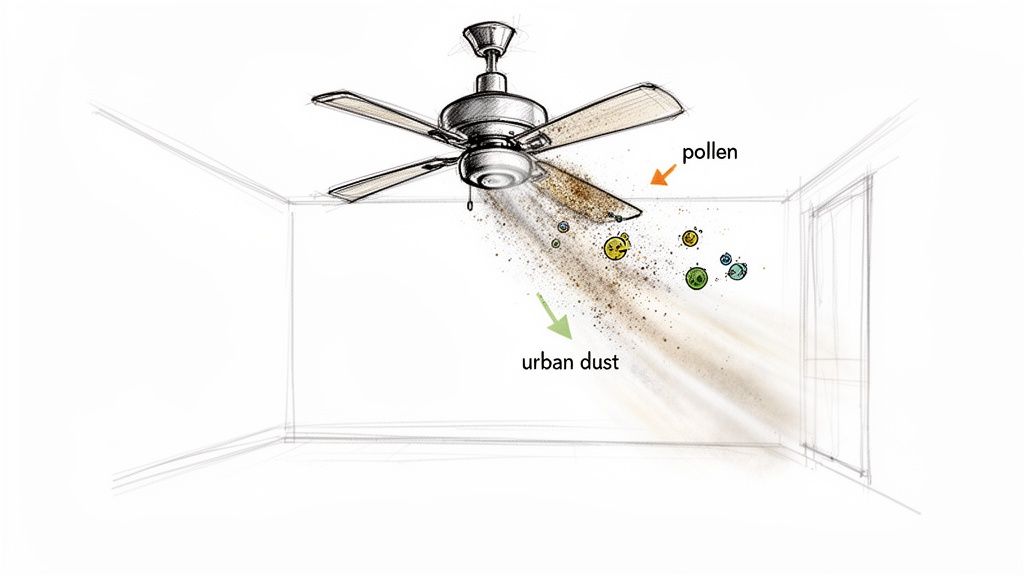
That thin layer of grime you see on your ceiling fan blades isn't just dust. Here in the Portland metro area, it's a special mix of local allergens, from the heavy tree pollen in the spring to the everyday urban dust that finds its way inside. The second you flip that switch, all of it gets launched right back into the air you’re breathing.
This is a big deal for anyone with allergies or respiratory issues, and it's something our professional house cleaning teams see in homes all over, from Hillsboro to Beaverton. That's why a thorough cleaning routine should always tackle this often-forgotten fixture.
More Than Just Dust
It's not just about what you're breathing in, either. Clean fan blades actually help your home run more efficiently. As dust and grime accumulate, they add weight and create drag, making the fan's motor struggle to keep up.
Did you know? A thick layer of dust can seriously impact your fan's performance. That extra weight can slow down air circulation by as much as 20-30%!
This added strain means the fan isn't cooling your room as well as it should, and it can even lead to higher energy bills down the road. The U.S. Department of Energy has even pointed out how much better clean fans are at moving air and filtering out airborne particles.
Keeping your fans clean is a straightforward way to create a healthier, more comfortable home. Whether you live in a downtown Portland apartment or a sprawling suburban house, it’s a task that delivers real benefits in air quality and energy savings. It's also a key part of the comprehensive home cleaning service we offer to our clients across the region, including in Portland.
Getting Your Gear Ready for a Clean Sweep
Ever started a cleaning project only to realize halfway through that you need to run downstairs for a cloth or a spray bottle? We’ve all been there. The secret to a fast, mess-free fan cleaning is getting all your supplies in one place before you even think about climbing that ladder. It turns a potential dust disaster into a quick, satisfying task.
First things first: safety. A solid, reliable stepladder is non-negotiable. Please, don't try to balance on a wobbly dining chair or a stack of books. It’s just not worth the risk. You’ll also want to grab some old sheets or a painter's drop cloth to lay down. This simple step will catch all the falling dust and save you from having to vacuum your entire room afterward.
Your Go-To Cleaning Arsenal
When it comes to the actual cleaning, you don't need a lot of fancy equipment. A good microfiber cloth is your best friend here. Unlike old cotton rags that just push dust around, microfiber is specifically designed to grab and hold onto every last particle. It’s a trick of the trade we use in every professional house cleaning job.
For your cleaning solution, a simple homemade mixture is usually all you need.
- For Everyday Dust: Just a few drops of mild dish soap in a spray bottle of warm water will do the trick for most fans. It’s gentle and effective.
- For Kitchen Grime: If you're tackling a greasy kitchen fan, add a bit of white vinegar to that same soap and water mix. Vinegar is fantastic at cutting through that sticky buildup without resorting to harsh chemicals.
Taking a few minutes to gather these items is the difference between a frustrating chore and an efficient clean. This "prep first" mindset is how our cleaning services approach every single job, whether it's a routine tidy-up or a full-blown deep clean.
One last pro tip: keep a second, completely dry microfiber cloth handy. After you’ve wiped the blades with your cleaning solution, give them a quick once-over with the dry cloth. This buffs away any moisture, preventing those annoying water spots and leaving a perfectly polished look. It’s a small detail that makes a huge difference. For more insights like this, check out our guide on how to deep clean a house.
The Pro Method for Spotless Ceiling Fan Blades
With your tools gathered, it's time to get those blades looking brand new. Our professional house cleaning teams have a few tried-and-true methods for getting the job done efficiently without making a bigger mess. But first, let's talk safety.
Before you even think about climbing that ladder, turn off the power to the fan. The wall switch is a good start, but for absolute safety, we always recommend flipping the breaker in your electrical panel. It’s a simple step that guarantees the fan won't accidentally start while you're up there.
The Game-Changing Pillowcase Method
For a regular dusting, especially on fans that just have a light layer of buildup, the pillowcase trick is a lifesaver. It’s a brilliant hack our teams use all the time because it traps all the dust inside, preventing that dreaded dust shower all over your furniture and floors—a common complaint in many Portland homes.
- Grab an old, clean pillowcase and carefully slide it over one fan blade, covering it completely.
- Lightly press the fabric against the top and bottom surfaces of the blade.
- Slowly and firmly pull the pillowcase back towards you. The fabric wipes the blade clean, and all that dust and grime falls right into the case.
Just repeat this for each blade. When you're finished, take the pillowcase outside, turn it inside out, and give it a good shake before tossing it in the wash. It's incredibly simple and keeps the rest of your room clean.
This graphic outlines the simple, essential tools for a professional-level clean.
Ready for a spotless home?
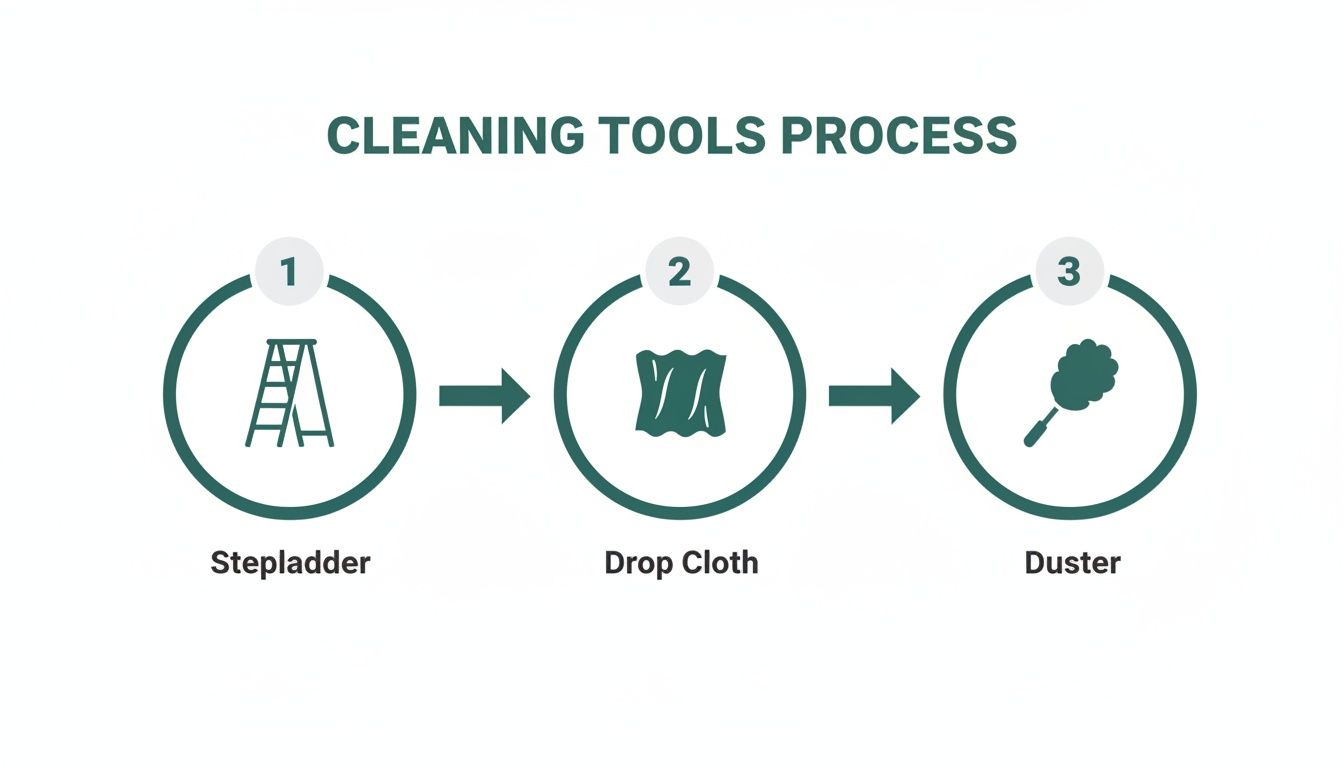
Starting with a solid setup, like a sturdy ladder and a drop cloth, makes the entire job safer and much more efficient.
Tackling Stubborn Grime on Any Blade Material
What if the pillowcase trick doesn't cut it? For that stickier, greasy buildup—something we see a lot on kitchen fans in Beaverton and Lake Oswego homes—you’ll need to switch to a two-step wipe-down.
Use a microfiber cloth that’s damp (not dripping wet!) with your cleaning solution to wipe down each blade. Immediately follow up with a second, completely dry microfiber cloth. This dry pass is the secret to preventing streaks and water spots, which is especially important for wood or painted blades that can be a bit more sensitive.
The two-cloth technique is a core part of our deep clean service. It ensures a flawless, polished finish that protects the fan's material while removing every trace of buildup. This meticulous approach is what separates a quick wipe from a truly professional result.
Not sure which method is right for your fan? It really just depends on how long it's been since the last cleaning.
Cleaning Method by Grime Level
| Grime Level | Best Method | Key Tip |
|---|---|---|
| Light Dust | Pillowcase Method | Fast, easy, and completely mess-free. Perfect for monthly maintenance. |
| Sticky Buildup | Two-Cloth Wipe-Down | Use a damp cloth then a dry one to avoid streaks, especially on wood. |
| Heavy Grease | Damp Wipe + Degreaser | Add a drop of dish soap to your water for extra cutting power on kitchen fans. |
Choosing the right technique from the start will save you time and give you a much better result. For most fans, a quick monthly dusting is all you'll need to keep them looking great.
Keeping Your Fan Maintained for Better Air Quality
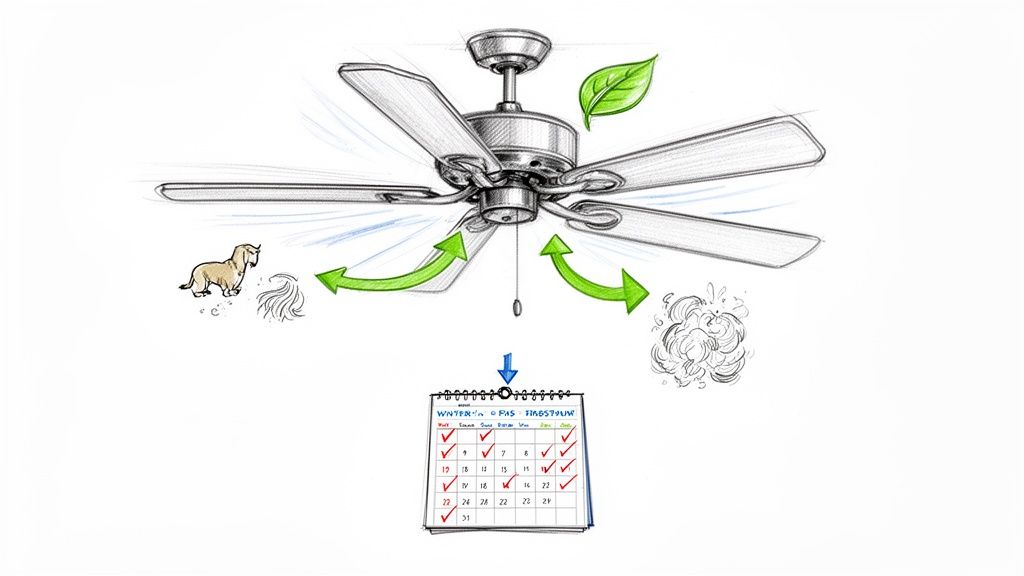
Giving your fan a deep clean is satisfying, but the real secret to better air quality lies in consistent upkeep. When you shift your mindset from a one-off chore to a regular maintenance habit, you stop a small task from snowballing into a huge, dusty project. This simple, proactive approach is what really makes a difference for your fan's performance and the air you breathe.
Think of it as just another small part of your regular home cleaning routine. A simple schedule is all it takes to prevent that caked-on layer of dust and allergens from forming and then circulating throughout your home every time you turn the fan on.
Your Go-To Fan Cleaning Schedule
So, how often should you actually clean those blades? Honestly, it depends entirely on your home. Not every household in the Portland area is going to have the same dust and grime situation.
- Homes with Pets or Allergies: If you have furry friends or deal with seasonal allergies, aim to dust your fans every one to two months. Pet dander, pollen, and other irritants accumulate fast, and cleaning regularly keeps them from being launched back into the air.
- Standard Households: For most homes, a quick cleaning every three to four months is plenty to keep dust under control and the fan working efficiently.
- Kitchen Fans: This is the big one. Kitchen fans are magnets for greasy, sticky residue from cooking. A monthly wipe-down is your best bet to stop that stubborn gunk from building up.
Sticking to a schedule does more than just keep your fan looking clean. It has a real impact on its efficiency by reducing strain on the motor, which can even help lower your energy costs over time. It’s a small bit of effort for a much healthier home environment.
A Pro Tip for Year-Round Comfort
Here’s a fantastic little trick that helps you get the most out of your fan all year long: reverse its direction when the seasons change. Look for a small switch on the motor housing—most fans have one.
In the summer, you want the blades spinning counter-clockwise. This creates a downdraft, pushing cool air down and making you feel refreshed. But in the winter, flip that switch so the blades spin clockwise. This creates a gentle updraft that pulls cool air up and pushes the warm air that's pooled near the ceiling back down into the room, making the space feel cozier without you touching the thermostat.
This kind of regular maintenance is just as important for businesses as it is for homes. Dusty commercial offices in Portland, for example, should probably have their fans cleaned every 2-3 months to maintain air quality for employees. Clean blades help fans pull airborne particles out of the air far more effectively—something even your HVAC filter can miss. If you want to see how the pros handle it, check out this detailed guide on fan cleaning.
When It's Time to Call a Professional Cleaning Service
Let’s be honest, while a quick DIY clean works for routine maintenance, some ceiling fans are a real pain to deal with. There are definitely times when calling in a professional maid service is the smartest—and safest—move you can make.
So, when does it make sense to have a pro handle it?
The Job is Just Too High
One of the most common reasons we get calls from clients here in Portland is for those beautiful, but sky-high, vaulted ceilings. Trying to balance on a wobbly, fully-extended ladder is a recipe for disaster. Our professional teams come equipped with the right ladders, extension tools, and safety training to tackle those hard-to-reach fans without anyone getting hurt.
You're Dealing with Stubborn, Caked-On Grime
Another tough situation is the fan that's been neglected for years, especially in a kitchen. You know the kind—covered in a sticky, greasy film that just smears around when you try to wipe it. This kind of buildup needs more than a damp cloth; it requires specific cleaning solutions and a bit of elbow grease to cut through the gunk without damaging the fan blades.
Pro Tip: If you're already scheduling a larger service, like a deep clean or a move out cleaning, ask to have the ceiling fans included. It’s an easy and efficient way to get everything done at once, making sure no detail is overlooked.
You Value Your Time and Safety
Hiring a professional isn't just about avoiding a chore. It’s about guaranteeing a perfect result without risking your safety. When you consider that over 30% of homeowners admit they put off cleaning their fans because of the hassle and safety concerns, the small cost of professional service seems like a pretty good trade-off. You can even check national cleaning cost estimates to get a better idea.
Ultimately, if you're short on time, don't have the right equipment, or have mobility issues, let an expert handle it. Our home cleaning service gets the job done right the first time, protecting your fan and freeing up your weekend. To understand more about what a thorough professional job entails, take a look at our breakdown of deep cleaning vs. regular cleaning.
Got Questions? We’ve Got Answers.
Even after you've got the basics down, a few tricky questions always seem to come up. As professional cleaners working all over the Portland area, from Beaverton to Lake Oswego, we've pretty much seen and heard it all. Here are the answers to the questions we get asked most often.
Should I Use Furniture Polish on My Wood Fan Blades?
It's a common thought—you want that nice, rich shine on your wood blades. But honestly, we recommend skipping the furniture polish. Most of them leave behind oily or silicone-based residues that are absolute dust magnets. You’ll end up with a sticky, grimy film that’s a nightmare to remove later.
Stick to the basics: a microfiber cloth that's just barely damp will do the trick. Follow it up with a quick wipe from a dry cloth, and your wood blades will look great without any gunk buildup.
What’s the Trick to Cleaning the Motor Housing?
That big central part of the fan, the motor housing, is a prime spot for dust to settle. The biggest mistake you can make here is spraying cleaner directly onto it. You really don't want moisture getting into the electrical parts.
Instead, spray a little all-purpose cleaner onto your cloth first, then wipe the housing down. If you need to get into the vents, a can of compressed air works wonders. A soft brush attachment on your vacuum is also a great, safe option.
Will I Need to Rebalance My Fan After Cleaning It?
Probably not. Just wiping down the blades shouldn't be enough to knock your fan off-kilter.
However, if you turn it on and suddenly notice a wobble that wasn't there before, don't panic. The pressure of cleaning can sometimes loosen the screws holding the blades in place. Just grab a screwdriver and make sure each one is snug. That almost always solves the problem.
Our Takeaway: Proper technique is everything. Using the right tools and avoiding harsh products not only gives you a better clean but also protects your fan for the long run. It’s a core principle of our apartment cleaning and home services.
When you'd rather leave the ladders and dust cloths to someone else, let the experts take over. For a spotless home without the hassle, trust Neat Hive Cleaning to deliver a pristine result every time. Book your professional cleaning service today at https://neathivecleaning.com.
Ready for a spotless home?